
Last updated October 30, 2026
 Wrought iron
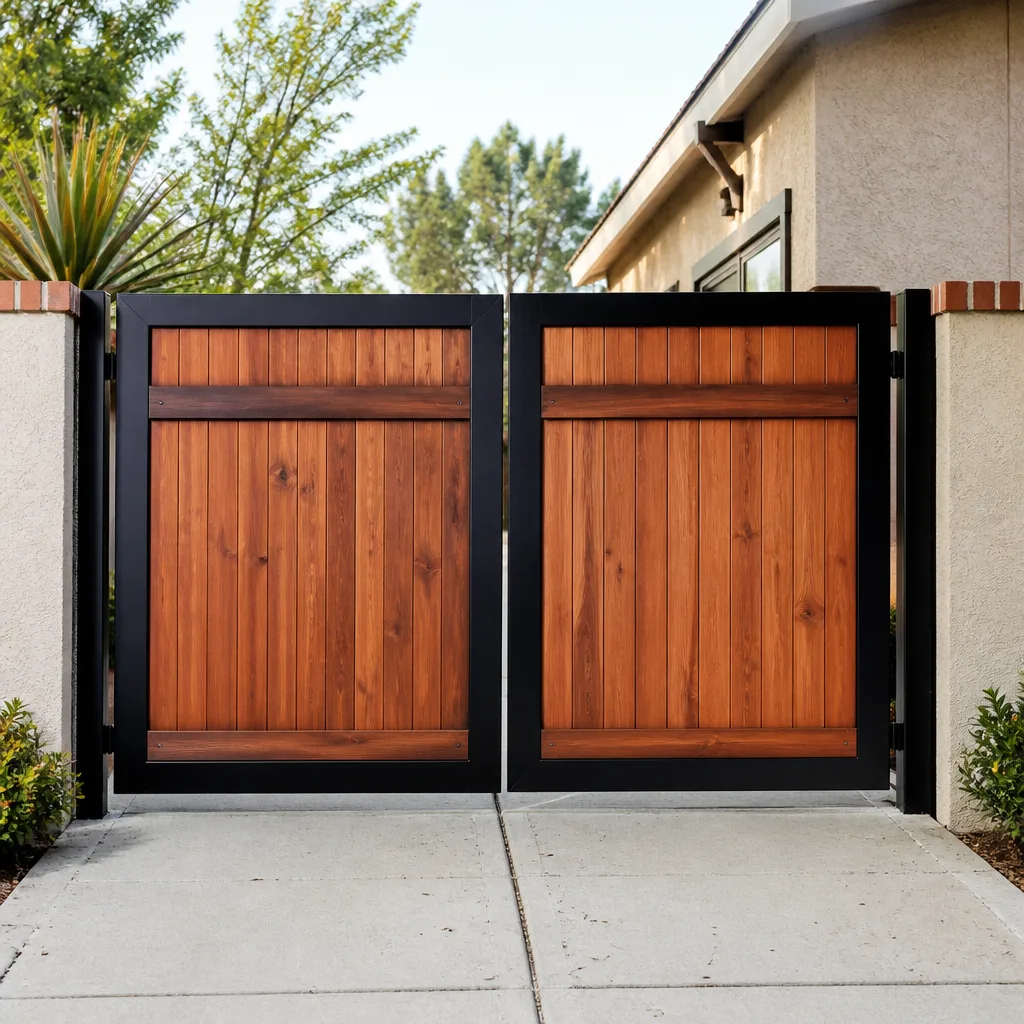 Wood & steel frame
 Farm & ranch
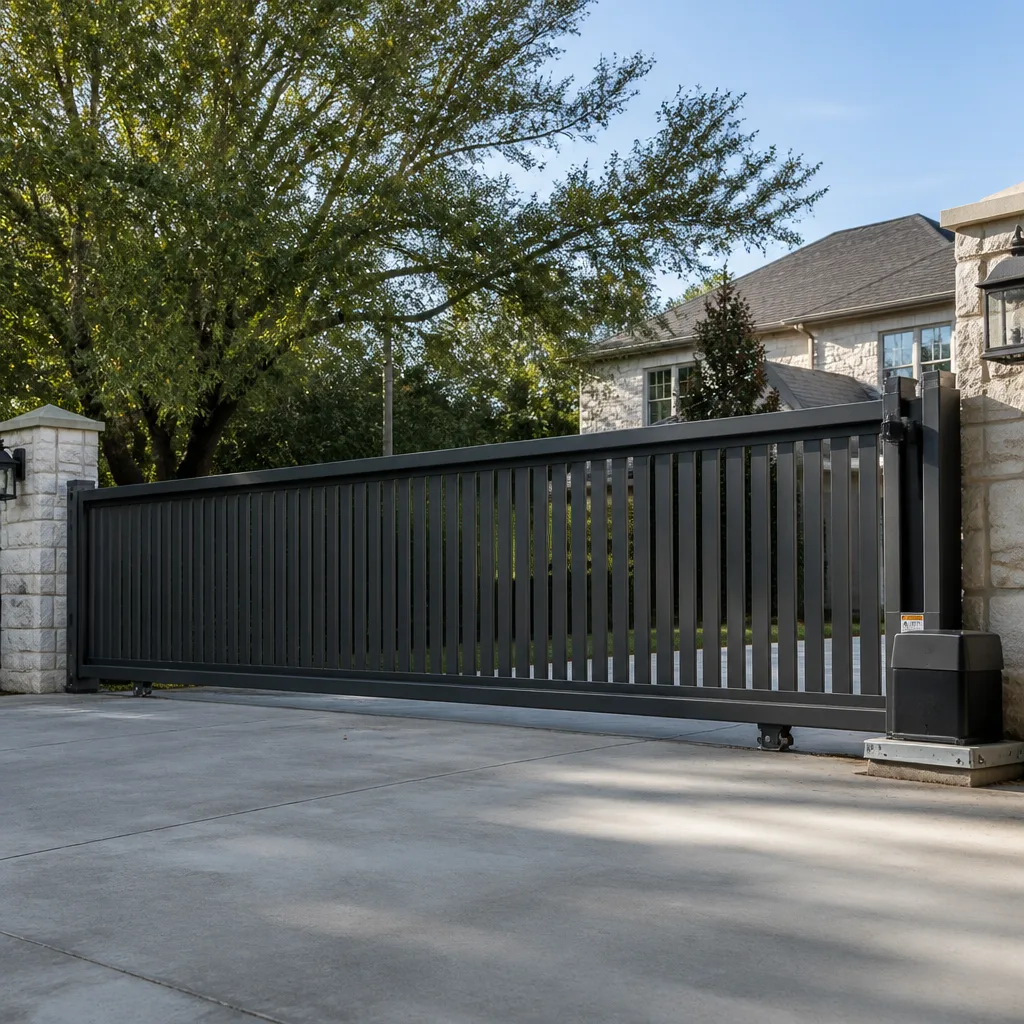 Sliding driveway gates
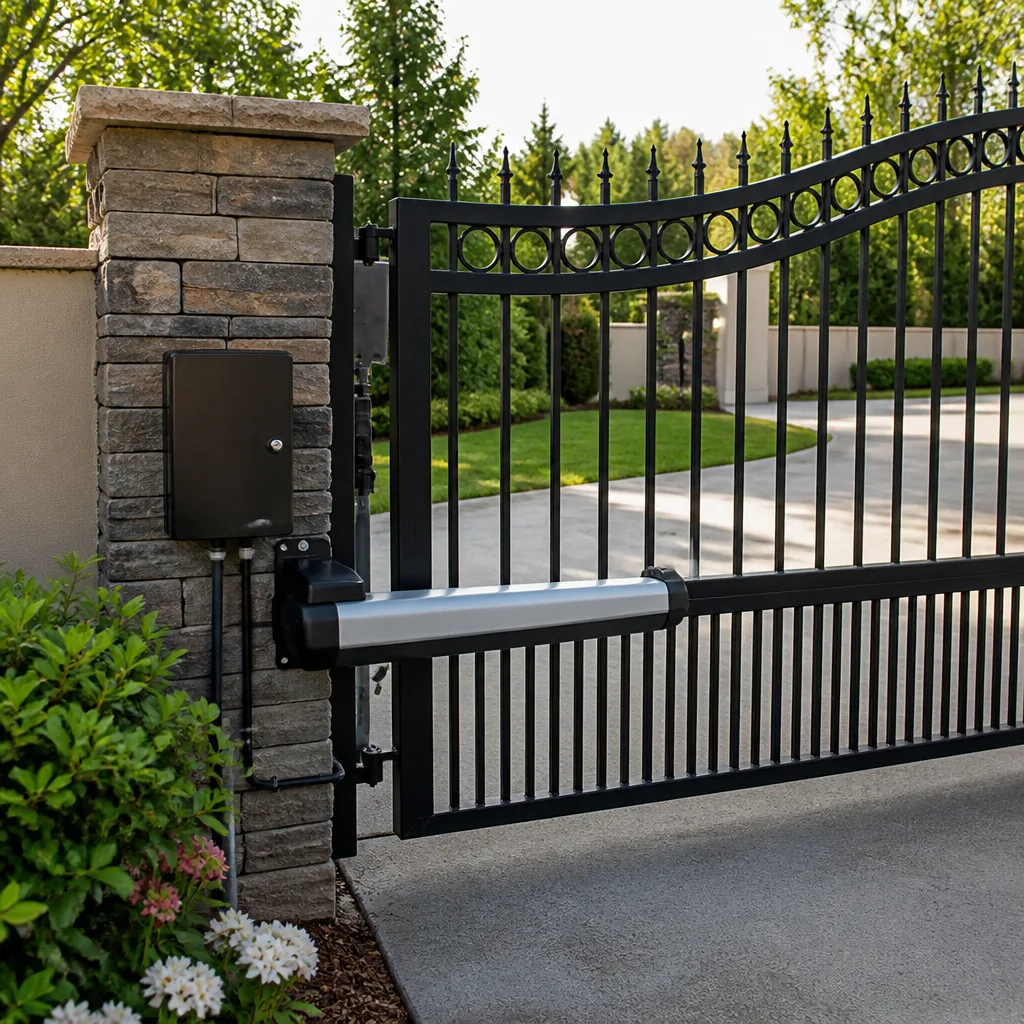 LiftMaster operators
Free on-site gate assessment - hinges, posts, and your LiftMaster or Nice gate operator checked before anything is quoted
The assessment is free and the quote is the invoice.
Get your free estimateGate Repair Maintenance Checklist for DeSoto Homeowners
Most DeSoto homeowners we talk to assume their gate failed because a part wore out. That’s rarely the whole story. The number-one maintenance task people skip isn’t lubrication, it’s checking gate post plumb. A post that’s moved a quarter inch off vertical puts constant side-load stress on the operator, the hinges, and the latch. That quarter inch can cut an operator’s lifespan in half. This checklist is built around what actually fails in DeSoto, in order of likelihood, so you can catch problems before they turn into a our Gate Repair services call.
Styles & brands we work with
Quick Answer
A proper gate maintenance routine in DeSoto means checking post plumb and concrete footers monthly, lubricating operator drive components quarterly with high-temperature products, testing battery backup and solar panels before storm season, and keeping a dated photo log of every inspection. Most gate failures here trace back to one of three things: post drift from expansive clay soil, heat-degraded lubrication, or ignored electrical connections. This guide covers each one.
Table of Contents
- Monthly: The 15-Minute Plumb and Visual Check
- Post Plumb and Concrete Footer Integrity: The Check Everyone Skips
- Quarterly Lubrication by Drive Type: What to Use in DeSoto Heat
- Electrical and Sensor Checks Most Checklists Miss
- Battery Backup and Solar Panel Inspection for Storm Season
- How to Log Maintenance So It Matters Later
- Common Mistakes to Avoid
- When to Call a Professional
- Frequently Asked Questions
- The Bottom Line
Monthly: The 15-Minute Plumb and Visual Check
This is the check that prevents 80% of the repair calls we get in DeSoto. It takes fifteen minutes and requires one tool: a 4-foot level. The soil here is dense, expansive clay. It swells when it rains and contracts during dry spells. Your gate posts sit in that soil, and over time, they move. You won’t notice it by looking. You’ll notice it when your gate starts dragging, or the operator starts groaning, or the latch stops lining up.
Here’s the monthly routine, in order:
- Check post plumb. Place a 4-foot level against each gate post, on two adjacent sides. The bubble should center. If it doesn’t, note which direction the post is leaning and roughly how far. A post that’s out of plumb by more than a quarter inch over four feet needs attention before the next storm season.
- Look at the gap between gate and post. Walk the gate through its full arc. The gap should stay consistent. If it narrows on one side, that’s post drift or hinge wear. Either way, it’s putting stress on the operator.
- Check the concrete footers. Look for hairline cracks radiating from the post base, or a visible gap between post and concrete. In DeSoto, soil expansion pushes up on footers. A gap means water is getting in, and water means rust on the post below grade.
- Listen to the operator. Run the gate open and closed twice. A healthy operator has a consistent hum. A grinding, clicking, or labored sound means the drive mechanism is working harder than it should. That’s usually an alignment or lubrication issue, not a dying motor. Yet.
- Check the safety edges and photo eyes. Wave your hand in front of each sensor while the gate is closing. It should reverse immediately. DeSoto sees enough wind-blown debris that obstructed sensors are common. But a sensor that’s misaligned or dirty is a sensor that won’t do its job when a child or pet is in the path.
Fifteen minutes, once a month. That’s the difference between a gate that lasts twenty years and one that needs a new operator in seven. If you find plumb issues, don’t ignore them, they compound.
Post Plumb and Concrete Footer Integrity: The Check Everyone Skips
We’ll say it plainly: in DeSoto, post drift is the root cause of more gate failures than any mechanical part wearing out. The expansive clay soil here is famous among foundation contractors for a reason. It moves. Your gate posts are mini-foundations, and they’re subject to the same forces as your house slab. The difference is that nobody sends you a postcard when your gate posts start to lean.
Here’s how to check post plumb properly and document what you find:
- Use a 4-foot level, not a 2-foot. A short level won’t catch gradual drift. You need the full length to see a quarter-inch deviation.
- Check two sides per post. Front-to-back and side-to-side. Posts rarely drift in only one direction.
- Mark your findings. Take a photo of the level against the post, with the bubble visible. Date it. Store it in a folder on your phone called “Gate Maintenance.” This becomes your drift log.
- Compare month over month. If the bubble was slightly off in March and slightly more off in April, you have active soil movement. That’s not a static problem, it’s a worsening one.
- Inspect the footer concrete. Walk around each post base. Look for cracks that are new or growing, gaps between concrete and post, or soil pulling away from the footer. In dry months, DeSoto clay contracts and creates that gap. When the rains come, water follows it down to the post base.
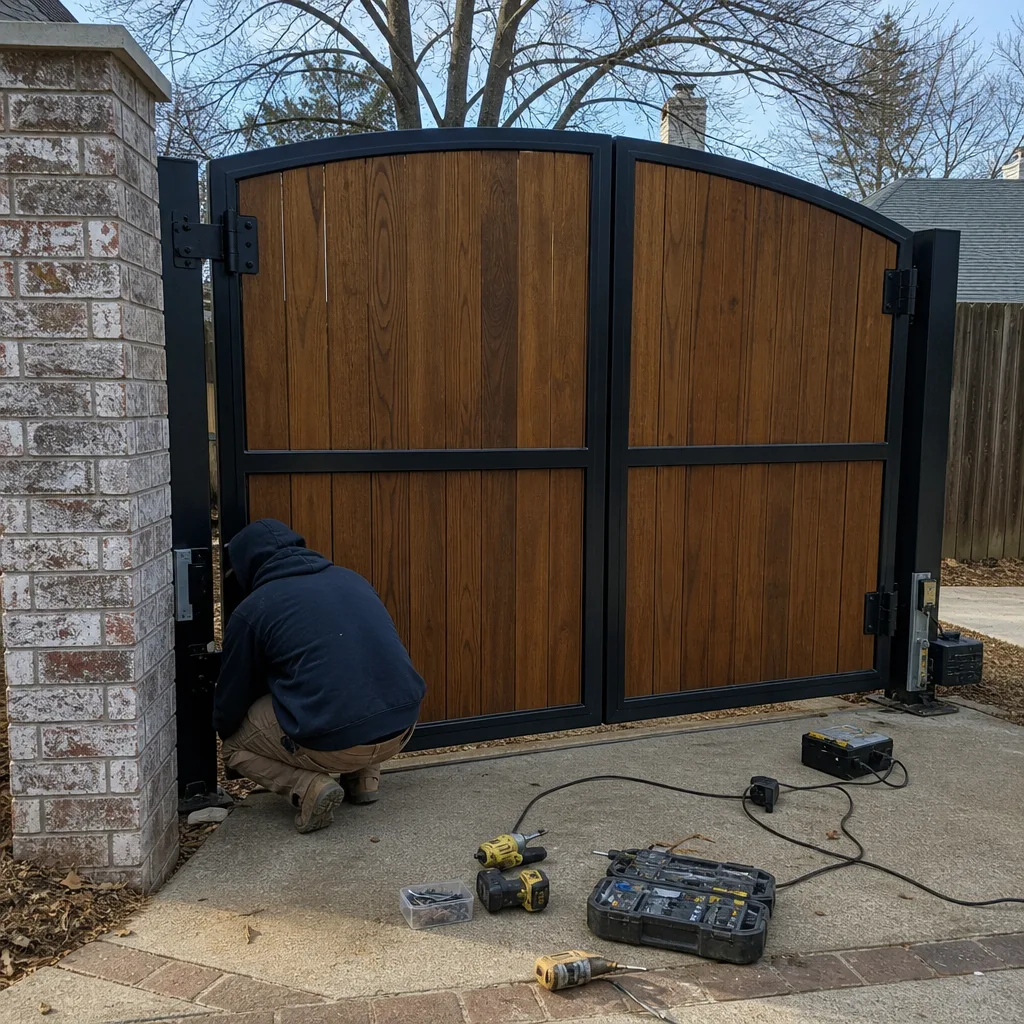
What do you do if you find drift? For minor movement, a professional can sometimes stabilize the footer with additional concrete or adjust the hinges and latch to compensate. For significant drift, especially on an automated gate, the post may need to be reset. That’s not a DIY job on an electric gate. The operator is calibrated to the gate’s weight and travel path. Reset a post wrong, and you’ll be replacing that operator within a year.
In our experience across DeSoto neighborhoods, gates on the east side of town near Ten Mile Creek see more soil movement than areas with sandier soil. If your property backs up to a creek or drainage area, check plumb more often, not less.
Quarterly Lubrication by Drive Type: What to Use in DeSoto Heat
Generic gate advice says “lubricate moving parts.” That’s not specific enough for DeSoto. Our summers routinely hit 100°F, and surface temperatures on a metal gate can exceed 140°F. Standard grease thins out and runs off. Cheap spray lubricants evaporate. What you use matters, and where you put it depends on what kind of operator you have.
Here’s the breakdown by drive type:
- Chain-drive operators (common on Mighty Mule and older DoorKing units): Lubricate the chain every 90 days with a dry-film lubricant or a dedicated chain lube that won’t fling. In high heat, wet chain lube attracts dust, and DeSoto has plenty of dust. Apply lightly. Wipe off excess. Check chain tension at the same time, a chain that’s too tight shortens motor bearing life.
- Belt-drive operators: The belt itself usually doesn’t need lubrication. The pulleys and tensioner do. Use a light silicone spray on the tensioner pivot points. Avoid getting anything on the belt surface. A greasy belt slips, and a slipping belt shreds.
- Screw-drive operators: These need a specific grease, usually the manufacturer’s recommended product. In DeSoto heat, screw-drive grease breaks down faster than in cooler climates. Check it monthly during summer. If the screw looks dry or the grease has turned dark and gritty, clean it off and reapply.
- Hinges and latch: Every gate, regardless of drive type, should have its hinges lubricated quarterly. Use a white lithium grease or a heavy-duty silicone. Don’t use WD-40 as a primary hinge lubricant, it’s a water displacer, not a long-term lubricant. It’s fine for cleaning, not for lasting protection.
- Wheels and track (if your gate is a sliding or cantilever style): Clean the track quarterly. Remove debris and check for dents or corrosion. Lubricate the wheel bearings with a light machine oil. A track full of grass clippings and gravel is the number-one cause of sliding gate failures in DeSoto.
If you’re not sure what type of operator you have, open the cover and look. A chain-drive has a visible chain. A belt-drive has a rubber belt. A screw-drive has a threaded rod. If the label says Ghost Controls, Elite, DoorKing, or Mighty Mule, the model number will tell you the drive type with a quick search. Or call us and describe what you see, we’ll tell you what to use.
Electrical and Sensor Checks Most Checklists Miss
Most gate maintenance guides cover hinges and lubrication and stop there. But in DeSoto, where electric gate operators are the norm, the electrical system is where the expensive failures live. And most of those failures are preventable with a simple visual inspection.
Here’s what to check quarterly, or more often if you’ve had recent heavy rain:
- Inspect all low-voltage wiring connections. Look for corrosion, especially at the operator’s control board terminals. Green or white powdery buildup means moisture is getting in. In DeSoto’s humid summers, this is common. Clean it off with electrical contact cleaner if you’re comfortable doing so. If the corrosion is extensive, the connection needs to be remade.
- Check the photo eye alignment. Most photo eyes have a small indicator light. It should be solid green or solid red, depending on the brand. A blinking light means misalignment or a dirty lens. Align the units so they point directly at each other. Clean the lenses with glass cleaner and a soft cloth.
- Inspect the loop detector area (if you have a vehicle loop). Look for cracks in the driveway concrete near the gate. If the loop wire is severed, the gate won’t open automatically for vehicles. That’s a repair, not a maintenance item, but spotting a crack early gives you the option to address it before the wire breaks.
- Check the operator’s ground wire. It’s there for lightning protection. Make sure it’s still connected. DeSoto gets serious thunderstorms, and a disconnected ground wire is an invitation for a fried control board.
- Look inside the operator housing for insect nests. Dirt daubers and fire ants love the warm, dry space inside a gate operator. They’ll build nests that short out connections. If you see evidence, clean it out carefully and consider a pest deterrent around the base.
- Test all keypad and remote functions. It’s easy to forget the access control components until they fail. Change keypad codes if you’ve had any turnover in people who have the code. Test every remote. If a remote is intermittent, it’s usually the battery, but it could be the receiver antenna.
None of these checks require an electrician. They require looking at the system and noticing when something is off. That’s the whole discipline of maintenance: notice it when it’s small.
Battery Backup and Solar Panel Inspection for Storm Season
DeSoto’s severe weather season runs from March through June, with a second round of thunderstorm activity in the fall. Power outages are a fact of life here, and an electric gate without battery backup is simply a locked gate during an outage. If you have a battery backup or a solar panel charging system, it needs inspection twice a year, once before spring storm season and once before fall.
Here’s the battery backup checklist, in order:
- Locate the battery. It’s usually inside the operator housing or in a separate battery box nearby. If you can’t find it, it’s likely integrated into the operator.
- Check the battery age. Most gate backup batteries last 2 to 3 years in DeSoto heat. Heat is the enemy of lead-acid and AGM batteries. If you don’t know when the battery was installed, consider replacing it proactively. A $60 battery is cheaper than a $300 service call during an outage.
- Look for swelling or leakage. A battery that’s bulging or has white residue around the terminals needs replacement immediately. Don’t touch a leaking battery with bare hands.
- Test the backup function. Turn off the breaker to the gate operator and try to open the gate. It should operate, possibly slower than normal. If it doesn’t, the battery is dead or the charger isn’t working.
- Disconnect and clean the terminals. Use a wire brush to remove corrosion. Reconnect tightly. Apply a thin coat of dielectric grease to prevent future corrosion.
For solar panel setups, which are more common on rural properties around DeSoto or on gates far from a power source:
- Clean the panel surface. Dust, pollen, and bird droppings reduce output. A clean panel can be 30% more efficient. Clean it with water and a soft cloth, no abrasive cleaners.
- Check panel angle. It should be angled for optimal sun exposure. If the mounting hardware has loosened, the panel may have shifted. Tighten hardware and re-angle toward the south sky.
- Inspect wiring from panel to battery. Look for cracked insulation, loose connections, or animal damage. Squirrels chew wires. It happens everywhere in DeSoto.
- Verify the charge controller. It should show a charging indicator when the sun is on the panel. If the light is red or absent, the controller may need replacement.
If any part of this feels beyond your comfort level, that’s normal. Electric gate systems mix mechanical parts, low-voltage wiring, and sometimes line voltage. A mistake can be expensive. This is the point where calling a specialist makes sense. See our Electric Gate Repair in DeSoto page for what a full system diagnostic includes.
How to Log Maintenance So It Matters Later
You might wonder why a maintenance log matters. Here’s the answer: when you sell your home, a buyer’s inspector will look at your gate. When you file an insurance claim after a storm, the adjuster will ask when the gate was last maintained. When you call a repair company, the technician’s first question is “when did this start?” A log answers all three.
Keep it simple. A folder on your phone works. A spreadsheet works. A small notebook inside the operator housing works, though it might not survive the weather. Here’s the format we recommend:
- Date of inspection
- What you checked (plumb, lubrication, electrical, battery)
- What you found (even if the finding is “no issues”)
- What you did (lubricated hinges, cleaned photo eyes, replaced battery)
- Photo of the gate and any problem areas
That’s it. Five fields per entry. If you ever call us for a gate repair in DeSoto, that log saves our technician twenty minutes of diagnosis. More importantly, it tells us whether a problem is new or chronic, which changes the repair approach.
For insurance purposes, log it after every severe weather event. If hail damaged your gate’s finish or lightning fried a control board, document it with photos immediately. The adjuster will ask for evidence of prior condition, and your log provides the baseline. This is the difference between a covered claim and a denied one.
One more thing: log any gate installation work or component replacements with the date, the part, and who did the work. If a warranty claim comes up later, you’ll have the documentation. Warranties on gate operators often require proof of installation by a qualified professional, and a missing receipt is a denied claim.
Common Mistakes to Avoid
- Skipping the post plumb check. This is the one that leads to the most expensive repairs. A quarter-inch of drift becomes an inch of drift within a year in DeSoto clay. Catch it early and you’re tightening with minor adjustments. Miss it and you’re resetting posts.
- Using the wrong lubricant. Spraying standard WD-40 on everything feels like maintenance but it’s not. It cleans, then it dries, and soon your hinges are squeaking worse than before. Use products formulated for the specific component.
- Ignoring the battery backup until the power goes out. Batteries don’t fail suddenly. They degrade over two to three years, and the first sign is a slow gate during a brief outage. That’s your warning. Replace it proactively.
- Forcing a gate that’s stuck. If your gate won’t move, don’t muscle it. You can bend the gate, strip the operator gears, or snap a chain. Figure out what’s binding first. Usually it’s alignment or debris in the track.
- Adjusting sensor alignment without knowing how. Photo eyes are sensitive. Small misalignments cause intermittent failures that are hard to diagnose. If you’re not sure how to align them properly, don’t guess. The fix for a misaligned sensor is a realignment, not a replacement.
- Treating maintenance as optional in summer. DeSoto’s heat doesn’t just make your gate hot. It accelerates every chemical process in your operator’s lubrication and battery. Your summer maintenance schedule should be more aggressive, not less.
- Keeping only one remote. When the single remote fails, you’re locked out until you get a replacement. Keep at least two working remotes per vehicle that regularly uses the gate. Program them and test them monthly.
When to Call a Professional
Some maintenance tasks are safe and straightforward for a homeowner. Others require specialized knowledge, proper tools, and an understanding of how the whole system interacts. If you notice any of these, stop the DIY approach and call us: a post that’s visibly leaning or footer concrete that’s cracked through, any electrical corrosion beyond light surface deposits, a gate that reverses unexpectedly or doesn’t respond consistently to the remote, any component that’s been damaged by water or lightning, or a system that’s more than ten years old and hasn’t been professionally inspected. The rule of thumb: if you’re not sure what the part does, don’t take it apart. Bastion Gate Repair offers free estimates in DeSoto. Call (866) 321-6117 and we’ll tell you what your system actually needs, repair or replace.
Frequently Asked Questions
Quarterly is the minimum, but twice per year with high-temperature products is better than four times per year with the wrong ones. During summer months, check screw-drive grease monthly. Chain-drive chains should be lubricated every 90 days in DeSoto’s heat and dust. If you hear squealing or grinding, the gate is telling you it’s been too long. Call (866) 321-6117 if you’re unsure which product to use for your operator type.
The clay soil in DeSoto expands and contracts with moisture, and it doesn’t return to the same position. The post’s concrete footer is likely undersized or cracked, which lets the post move independently of the soil. Pushing it straight doesn’t fix the footer, and repeated movement weakens it further. A proper repair usually involves resetting the post with a larger footer or adding concrete to stabilize the existing one.
Gate operator replacement in DeSoto typically ranges from $800 to $2,500 depending on the drive type, brand, and whether electrical work is needed. A basic residential Mighty Mule or Ghost Controls operator with installation might be $800 to $1,200, while a commercial-grade DoorKing or Elite system with access control can run $1,800 to $3,500 or more. We quote every job before work starts, so you’ll know the full price before we begin. Call (866) 321-6117 for an exact quote.
For most common failures, emergency gate repairs, broken springs, stuck openers, sensor issues, we can often accommodate same-day or next-day service in DeSoto. For problems requiring parts that aren’t in stock, we’ll tell you the timeline up front. The fastest way to find out is to call (866) 321-6117 and describe what’s happening. Our dispatcher will give you a realistic window.
Most automated gates have a manual release mechanism, usually a pull handle or key release on the operator. If you have a battery backup, the gate should operate normally during an outage. If you don’t have battery backup and the manual release is stuck or you can’t find it, don’t force the gate. The arm or chain is under tension. Call us and we’ll talk you through it, or come out if needed.
Yes. We service residential and commercial gate systems across all our service categories. We work on brands most shops won’t touch, including DoorKing, Elite, FAAC, BFT, and Linear. That includes everything from a simple driveway gate to a full gated community entrance with loop detectors. If you’re a property manager or HOA board member, call (866) 321-6117 and ask for a free site assessment.
The Bottom Line
A gate in DeSoto doesn’t fail because it’s old. It fails because something was ignored until it couldn’t be ignored anymore. Post drift from expansive clay soil is the number-one killer of gate operators in this area. High heat degrades lubrication faster than most maintenance schedules assume. Battery backups and solar panels get forgotten until the power goes out. If you check plumb monthly, lubricate quarterly with the right products, inspect electrical connections twice a year, and keep a photo log, your gate will outlast most of your neighbors’ gates by a decade. And when something does go wrong, you’ll catch it small instead of calling us for a catastrophic failure. We’d rather meet you for a free estimate than an emergency, and you can find more guides & resources on our blog.
Written by the team at Bastion Gate Repair, serving DeSoto since 2012.
See the difference
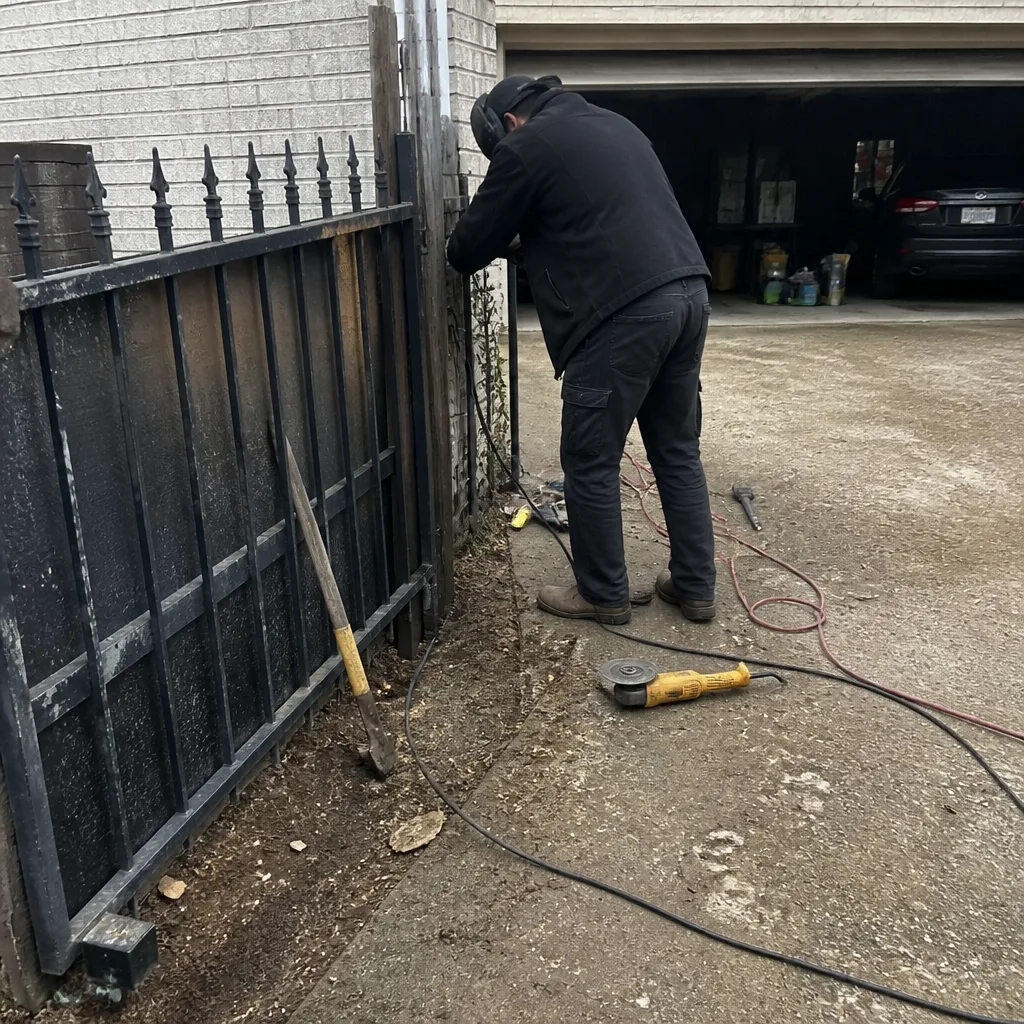 Before
 After
 Before
 After
 Before
 After