
Last updated October 30, 2026
 Wrought iron
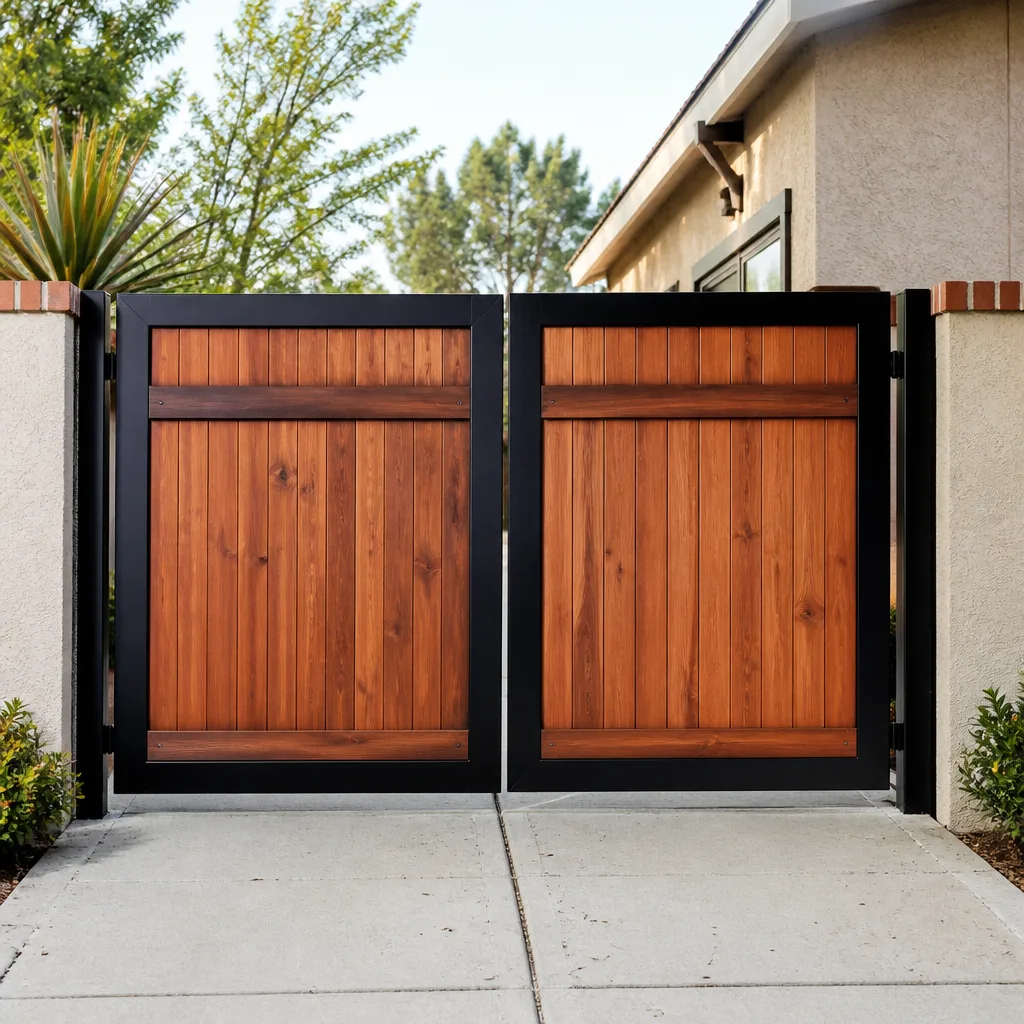 Wood & steel frame
 Farm & ranch
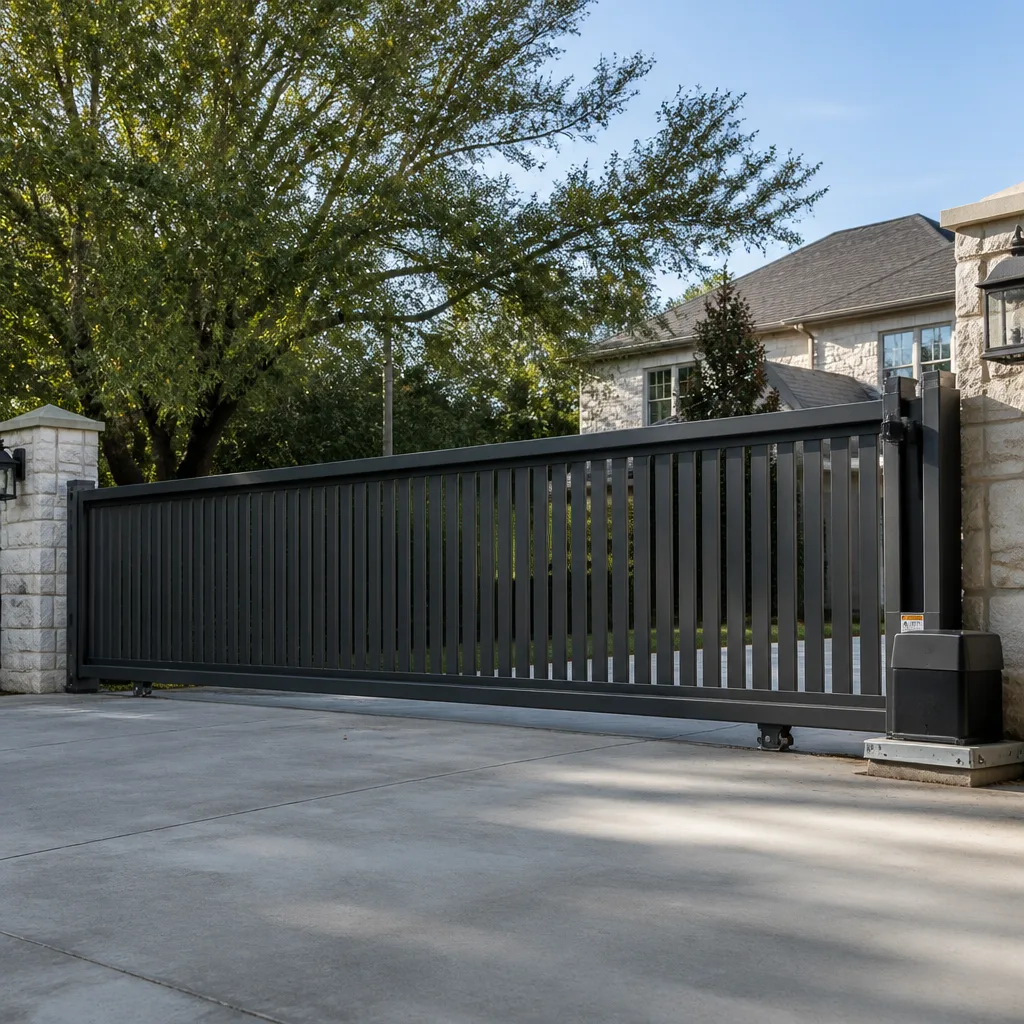 Sliding driveway gates
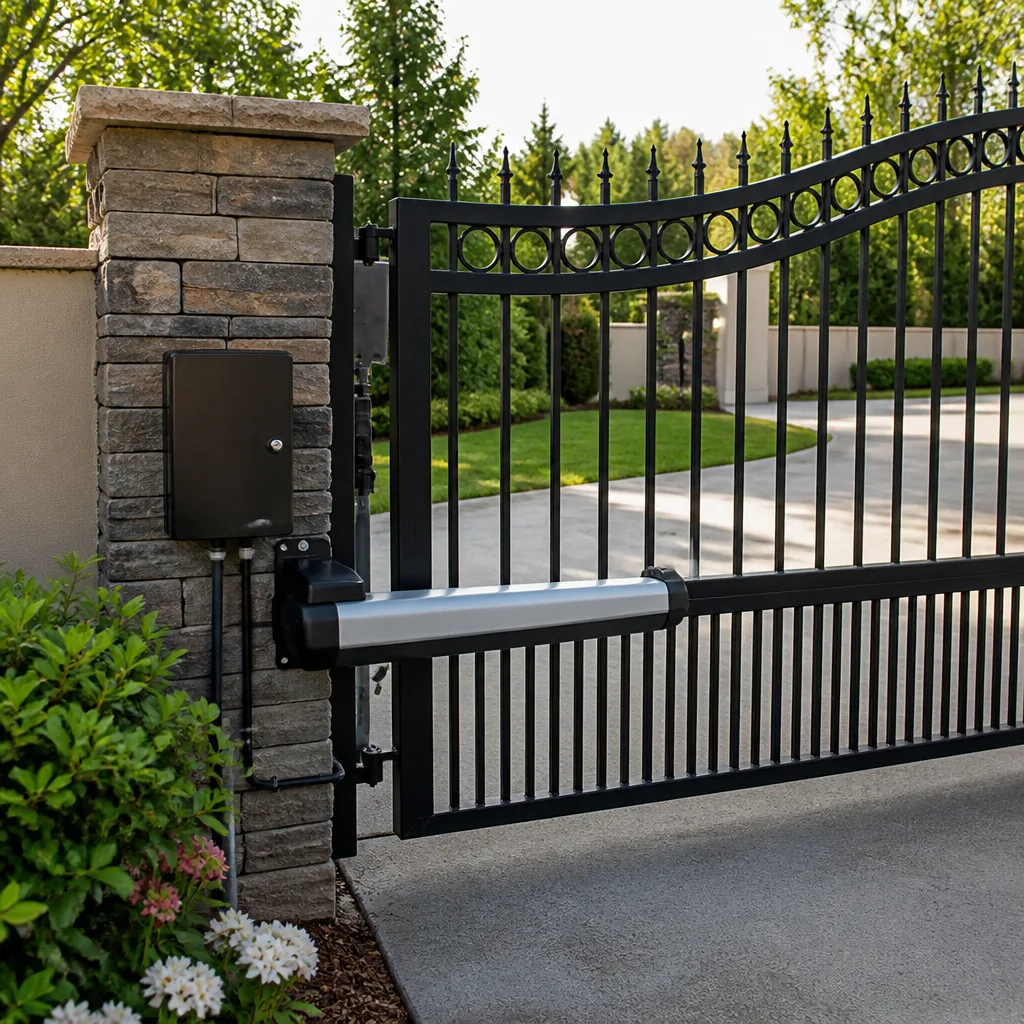 LiftMaster operators
Free on-site gate assessment - hinges, posts, and your LiftMaster or Nice gate operator checked before anything is quoted
The assessment is free and the quote is the invoice.
Get your free estimateThe Complete Gate Repair Guide for DeSoto Homeowners
DeSoto sits on some of the most expansive clay soil in North Texas, the kind that moves up to four inches seasonally and quietly torques gate posts out of plumb before a single component ever fails. Most gate repair guides never mention this. They talk about hinges and circuit boards as if a gate exists in a temperature-controlled lab, not bolted to ground that swells every spring and cracks every August. This guide is different. You’ll learn which failures trace back to DeSoto’s soil and heat, which repairs you can safely handle yourself, and which ones require a specialist who understands how climate stresses gate systems over time.
Quick Answer
Gate repair in DeSoto almost always comes down to one of four root causes: post misalignment from expansive clay soil, heat-damaged capacitors and circuit boards, worn mechanical components from constant opening cycles, or failed sensors and loop detectors on automated systems. Most repairs cost between $180 and $800 depending on the component and gate type, and the first step is always a proper diagnosis rather than a blind parts replacement. Gate Repair in DeSoto should address the actual failure point, not just the symptom.
Styles & brands we work with
Table of Contents
- Why DeSoto’s Clay Soil Is the Root Cause of Most Gate Failures
- Heat Load Reality: What 100°F Summers Do to Gate Operators
- DIY vs. Professional: A Decision Tree for DeSoto Homeowners
- Gate Type vs. Repair Priority: Swing, Slide, and Barrier Arm
- How Electric Gate Systems Actually Work in North Texas
- Documenting Repair History for Resale and HOA Compliance
- What to Know About the Major Gate Brands in DeSoto
- What Gate Repair Costs in DeSoto
Why DeSoto’s Clay Soil Is the Root Cause of Most Gate Failures
When we open a service call in DeSoto, the first thing we look at is not the gate itself. It is the ground underneath it. The blackland prairie clay that runs through southern Dallas County expands dramatically when wet and contracts equally dramatically during drought cycles. A gate post set in that soil can shift two to four inches over a single calendar year, depending on rainfall patterns and drainage. That movement transfers directly into the gate leaf, pulling hinges out of alignment, stressing weld points, and forcing the latch mechanism into angles it was never designed to accommodate.
Here is the sequence we typically see in DeSoto subdivisions like Hampton Place, Briarwood, and Ten Mile Creek:
- Post lean develops slowly. The post drifts out of plumb by a degree or two. The gate still opens, but it requires slightly more force.
- The gate begins dragging. The lower corner of the gate contacts the driveway or the latch side binds against the receiver. Homeowners often mistake this for a hinge problem and lubricate everything, which masks the issue for a few weeks.
- The opener compensates, then fails. An automated operator pushes against the added resistance every cycle. Force settings get maxed out. Motors overheat. Circuit boards burn. By the time the system stops working, the post has been leaning for months.
- Visible damage appears. Weld cracks at hinge points, bent brackets, sagging gate leaves. By this stage, resetting the post alone will not fix the system; components have been stressed past their intended limits.
The takeaway: if your gate scrapes, drags, or binds in DeSoto, do not assume it is a hinge problem. Check the post. A level against the post face will tell you in ten seconds whether the plumb line is off. If it is, mechanical repairs will only buy time before the underlying issue reasserts itself. Proper post resetting in clay soil requires removing the old concrete footer, re-digging below the active soil line, and setting the post in new concrete with proper drainage considerations. This is not a weekend project. On the Bastion Gate Repair home page, we outline the full diagnostic process we use before recommending any repair path.
Heat Load Reality: What 100°F Summers Do to Gate Operators
DeSoto regularly posts forty or more days above 100°F between June and September. That heat does not just make the gate uncomfortable to touch. It degrades electronic components at a measurable, predictable rate. Capacitors, the cylindrical components that store electrical charge and smooth out motor startup, have a manufacturer-rated lifespan that assumes an operating environment around 77°F. For every ten degrees above that, the expected lifespan drops by roughly half. A capacitor that would last eight years in a mild climate can fail in three in a DeSoto summer.
We see this pattern constantly with Heat-damaged circuit boards and bulging capacitors in LiftMaster and Viking operators, especially units installed on south-facing or west-facing posts with no shade structure. The control board inside a metal gate operator housing can reach 140°F or higher on a July afternoon, even when the air temperature is “only” 102°F. Thermal cycling, the repeated expansion and contraction of solder joints and circuit traces, eventually creates micro-fractures that cause intermittent failures. The gate works in the morning, stops working at 3 p.m., and mysteriously starts again after sunset. Homeowners write that off as gremlins. It is thermal stress, and it will only get worse.
What you can do in DeSoto:
- Add shade where feasible. A simple shade panel or positioning the operator housing out of direct afternoon sun extends component life meaningfully. Even a few degrees matters.
- Do not ignore intermittent failures. A gate that fails during peak heat and recovers at night is warning you that a component is degrading. The eventual failure will be permanent, and it will happen at the worst possible time.
- Check the capacitor visually. If you are comfortable opening the operator housing (with power disconnected), a bulging or leaking capacitor is a clear sign of heat damage. If you are not comfortable, do not open the housing. Call a professional.
We recommend that DeSoto homeowners with automated gates have the operator internals inspected at least once every two years, specifically looking for thermal wear. This is preventive maintenance that catches $80 capacitor failures before they become $400 circuit board replacements.
DIY vs. Professional: A Decision Tree for DeSoto Homeowners
Not every gate problem requires a service call. Some repairs are genuinely safe for a capable homeowner. Others should never be attempted without training, and a few will void warranties or create liability if done incorrectly. Here is the decision tree we use when homeowners ask what they can handle themselves.
- Is the gate powered by electricity at the operator level (not just a battery backup)? If yes, treat anything beyond battery replacement or visible loose-wire reconnection as professional territory. Electric and automated gate systems carry enough current to cause serious injury. Electric Gate Repair in DeSoto involves working with line voltage, capacitors that hold charge even when disconnected, and moving mechanical parts under tension. This is not speaker-wire territory.
- Is the problem a limit switch adjustment? On many residential operators, the limit switches control how far the gate travels before stopping. If your gate opens fully but then immediately starts creeping back closed, or if it stops before reaching full travel, a limit switch adjustment may resolve it. Consult your operator manual. If the manual calls for a service tool or you feel unsure, stop and call.
- Is the problem a dead battery in a solar or backup system? Mighty Mule and Ghost Controls units commonly run on 12V batteries. A battery that will not hold charge is a legitimate DIY swap, as long as you use the correct battery type and follow the polarity markings. This is a five-minute job with a screwdriver.
- Is the gate physically heavy, off its track, or grinding? Stop. Do not continue operating the gate. A gate that has jumped its track or is dragging hundreds of pounds across a misaligned path is a mechanical failure that can cause the gate to fall or the operator to fail catastrophically. This is a professional repair, full stop.
- Is the problem intermittent and heat-related? As covered above, this points to electronic component failure. Replacing a capacitor on a commercial-grade operator requires understanding discharge procedures and correct component ratings. If you have to ask what a capacitor discharge tool is, you should not be doing this repair.
The warranty consideration matters more than most homeowners realize. LiftMaster, FAAC, and linear operators all carry warranty terms that are voided by unauthorized repair work. If a homeowner opens an FAAC operator, replaces a part incorrectly, and the board fries a week later, the manufacturer has clear legal grounds to deny the claim. Sometimes the “cost savings” of a DIY repair becomes the entire cost of a new operator. We tell DeSoto homeowners this directly: if you are not certain, the diagnostic call is free, and it beats voiding a warranty on a $1,200 operator.
Gate Type vs. Repair Priority: Swing, Slide, and Barrier Arm
Different gate architectures fail in different sequences. Knowing what to inspect first on your gate type saves time and catches problems before they cascade. Here is how we prioritize inspection on the three most common gate types in DeSoto.
Swing Gates (Most Common in Residential DeSoto)
Swing gates are the workhorses of DeSoto subdivisions, from single driveway gates in older neighborhoods to the double-gate entries in newer developments. Their first-failure points, in order of frequency:
- Hinge wear and post movement. As covered above, clay soil is the primary culprit. Inspect hinges quarterly for visible gaps, sagging, or cracking welds.
- Opener arm or piston attachment points. The bracket that connects the opener arm to the gate experiences concentrated stress. Bolts loosen, holes elongate, and eventually the bracket tears free.
- Limit switch drift. Swing gates, especially with hydraulic operators, gradually lose their open and closed limit positions. This is a normal wear item and usually a simple adjustment.
- Control board failure. Typically heat-related in DeSoto, as described above.
Slide Gates (Commercial and Larger Residential Properties)
Slide gates ride on a track and guide rollers. Their failure sequence is different:
- Track obstruction and debris buildup. Leaves, soil, and gravel accumulate in the track. The gate starts to judder and strain. Clean the track regularly; this is a five-minute maintenance task that prevents expensive motor damage.
- Guide roller wear. Rollers flatten over time. A flat roller creates drag and metal-on-metal wear inside the track.
- Chain or belt tension loss. Slide gate operators use a chain or belt drive. These stretch with age and temperature cycling. A loose chain can jump a sprocket, which is a dramatic failure with potential safety implications.
- Motor overload from ignored drag. Slide gates that have been fighting debris or worn rollers for months eventually burn out their motors. This is an expensive, avoidable replacement.
Barrier Arm Gates (HOA Entrances and Commercial Access Points)
Barrier arms see hundreds of cycles per day in some DeSoto communities. Their first-failure points:
- Arm impact damage. Drivers hit barrier arms constantly. A bent or cracked arm is usually replaceable without touching the operator.
- Spring or counterbalance failure. The arm relies on a counterbalance mechanism. When it fails, the arm either drops without power or cannot be raised manually.
- Loop detector malfunction. The induction loop in the driveway that tells the system a vehicle is present is a critical component. Loops fail from pavement cracking, which is a direct consequence of clay soil movement in DeSoto.
- Access control system failure. Keypads, readers, and intercom boards degrade with heat exposure. We field more August access control calls than any other month.
For a deeper look at how we approach faulty gate systems of every configuration, see our Gate Repair in DeSoto service page, which covers our diagnostic-first methodology in detail.
How Electric Gate Systems Actually Work in North Texas
An automated gate is not one machine. It is a system of interconnected components, and understanding the architecture helps homeowners describe problems accurately and make informed repair decisions. Here is the component chain, in the order power and signal flow through it.
The Power Supply
Every automated gate starts with power. In DeSoto, most residential systems run on 110V AC from the house, stepped down to 12V or 24V DC at the operator. Some systems, particularly Mighty Mule and Ghost Controls installations, run on solar-charged batteries with no hardwired power at all. The first diagnostic question is always: is the system receiving power? A tripped GFCI outlet, a dead battery, or a failed transformer accounts for a surprising percentage of “my gate won’t open” calls.
The Controller Board
The logic board is the brain. It reads input signals from the remote, keypad, or loop detector, and it sends output commands to the motor. Heat kills boards in DeSoto, as covered above, but so do power surges. North Texas thunderstorms produce frequent voltage spikes. A surge protector at the gate operator power source is cheap insurance.
The Motor and Drive Mechanism
The motor converts electrical energy into mechanical movement. Swing gates use either a linear piston (hydraulic or electromechanical) or an articulated arm. Slide gates use a gear-drive or chain-drive motor. Barrier arms use a motorized spring-balance system. Motor failure is almost always preceded by weeks or months of visible strain: slow operation, grinding sounds, or the motor running but the gate not moving properly.
The Safety and Sensing Components
Every automated gate installed in recent years is required by code to have safety devices: photo-eye sensors that detect obstructions, edge sensors on the gate leaf that reverse on contact, and loop detectors that sense vehicle presence. These components fail gracefully (the gate refuses to close, or stays open when it should close) but they also degrade with age and heat exposure. In DeSoto, we commonly see photo-eye failures from sun glare, spider webs, and alignment drift caused by post movement, all environmental factors that are more aggressive here than in milder climates.
The Access Control Layer
Keypads, remote receivers, intercom systems, and RFID readers are the access control layer. These components are the most heat-sensitive part of the entire system, with a service life that in DeSoto can be half of what the same unit would last in a coastal climate. On the Electric Gate Repair in DeSoto page, we break down the most common access control failure modes we repair, from dead keypad displays to complete intercom board replacements.
Documenting Gate Repair History for Resale and HOA Compliance
When a DeSoto home with an automated gate goes on the market, the gate becomes part of the property’s value proposition. A well-maintained gate with documented service history adds curb appeal and buyer confidence. A gate with no history, visible wear, and an unknown service record becomes a negotiation point, or worse, a post-closing dispute. Here is how to document repairs properly.
- Keep a simple log. Date, service performed, parts replaced, technician or company name, cost. A notebook, a spreadsheet, or a file in your email; the format matters less than the consistency.
- Ask for detailed invoices. Any professional repair should come with an itemized invoice that lists specific components replaced. “Control board, LiftMaster model TSS Board, part number X” is far more useful to a future buyer than “fixed gate.”
- Note warranty periods. Many gate components carry multi-year warranties. Document when a part was replaced so you can identify if a subsequent failure is covered.
- Photograph post-set and operator placement. If you reset gate posts, photograph the excavation and the new concrete footer before backfilling. This proves the work was done correctly and gives future contractors accurate information.
- Understand HOA requirements before you change anything. Many DeSoto subdivisions with gated entrances have architectural control requirements for gate replacement or major repair. Replacing a worn gate with a different style or color can put you at odds with your HOA. Check before you commit.
What to Know About the Major Gate Brands in DeSoto
We work on virtually every major gate brand installed in North Texas, including LiftMaster, FAAC, BFT, Linear, Viking, Ghost Controls, DoorKing, Elite, and Mighty Mule. That brand breadth matters because homeowners often assume their gate can only be repaired by the original installer, which is rarely true. A qualified technician with experience across these platforms can diagnose and repair almost any system. Here is what you should know about the brands we most commonly see in DeSoto.
LiftMaster
LiftMaster dominates the residential and light commercial market in DeSoto. Their operators are generally reliable, but their control boards are not immune to North Texas heat. We also see a recurring pattern of transformer failures on LiftMaster units that have been in service five or more years. The good news: LiftMaster parts are widely available, and most repairs are cost-effective compared to replacement.
FAAC
FAAC is a premium brand, common in high-end residential installations and commercial settings. Their hydraulic swing gate operators are outstanding, but they require periodic maintenance that many homeowners skip. Hydraulic fluid levels, seal condition, and pressure settings all need checking. When a FAAC system fails from neglect, the repair bill reflects that neglect.
Elite and DoorKing
Elite and DoorKing units are workhorses in HOA and commercial gate applications across DeSoto. They are built for high cycle counts. Their failure modes tend to be mechanical wear and loop detector issues rather than electronic failure. When they do need board work, the boards are expensive enough that a diagnostic-first approach matters; you do not want to buy a $600 board when the problem is a $40 loop detector.
Mighty Mule
Mighty Mule is the most common DIY-installed residential gate opener in the area. We see a lot of them, and we see them in every state of repair. The most common failure modes are battery degradation, solar panel undersizing, and control board damage from reversed wiring. Mighty Mule units are affordable to replace, but they are also often misdiagnosed. A Mighty Mule gate that “doesn’t work” frequently has a simple power or limit switch problem that a $50 part fixes. Gate Installation in DeSoto covers how we approach new system design, from gate sizing to operator selection.
What Gate Repair Costs in DeSoto
Repair pricing is always project-specific, but we provide honest ranges because homeowners deserve a realistic expectation before the first service call. Here is what we typically see in DeSoto for common gate repair categories.
- Diagnostic service call: $75 – $125, often waived if you proceed with repair. This is the money that saves money; a proper diagnosis prevents replacing the wrong part.
- Limit switch adjustment: $85 – $175. Simple, fast, and one of the most common repairs on residential swing gates.
- Capacitor replacement: $120 – $220 including part. Heat-related capacitor failures are among the most frequent repairs we make in August and September.
- Photo-eye sensor replacement or realignment: $100 – $250. Sun glare and post movement make this a recurring DeSoto issue.
- Gate post reset: $350 – $900. Depends on post size, gate weight, and how badly the original footer has failed. This is the repair that actually fixes recurring alignment problems.
- Circuit board replacement: $250 – $800. Board cost varies dramatically by brand. FAAC and Elite boards cost more than Mighty Mule or basic LiftMaster units.
- Complete operator replacement: $700 – $2,500 installed. The range reflects the difference between a residential Mighty Mule and a commercial-grade FAAC or Viking operator.
Every quote we provide is stated upfront and agreed before any work begins. No surprises on the invoice. If you call for a diagnostic and the actual repair is simple, you pay for the simple repair; we do not invent work that does not exist.
Common Mistakes to Avoid
- Lubricating a gate that is actually misaligned. Lubricant masks binding for a few weeks, but the post lean or hinge wear that caused the binding is still there, and it is getting worse. If noise comes back after lubrication, look at the post and hinges.
- Ignoring slow operation. A gate that opens noticeably slower than it did a year ago is telling you something. Continued operation under load accelerates motor and board wear. The fix is always cheaper before the component fails completely.
- Replacing a board without finding the underlying cause. Sometimes a board is just a heat casualty, yes. But a board that failed due to a binding gate or a shorted accessory will fail again if the underlying issue is not corrected. Diagnostic-first repairs last.
- Attempting spring or tension repairs without training. Gates under tension can release stored energy suddenly. This is genuinely dangerous. Do not do it. Call a professional who has the proper tools and training.
- Assuming the cheapest fix is the right fix. In DeSoto’s clay soil, a quick hinge replacement on a leaning post is a temporary patch that will repeat. Sometimes the more expensive repair (post reset) is the one that actually solves the problem. We tell homeowners this directly, even when it is not what they want to hear.
- Skipping maintenance because the gate “works fine.” Working fine and working right are different. A gate that scrapes slightly, or a keypad that requires three presses, is in the early stages of failure. Seasonal inspection catches these issues for under $150 before they become $1,000 repairs.
See the difference
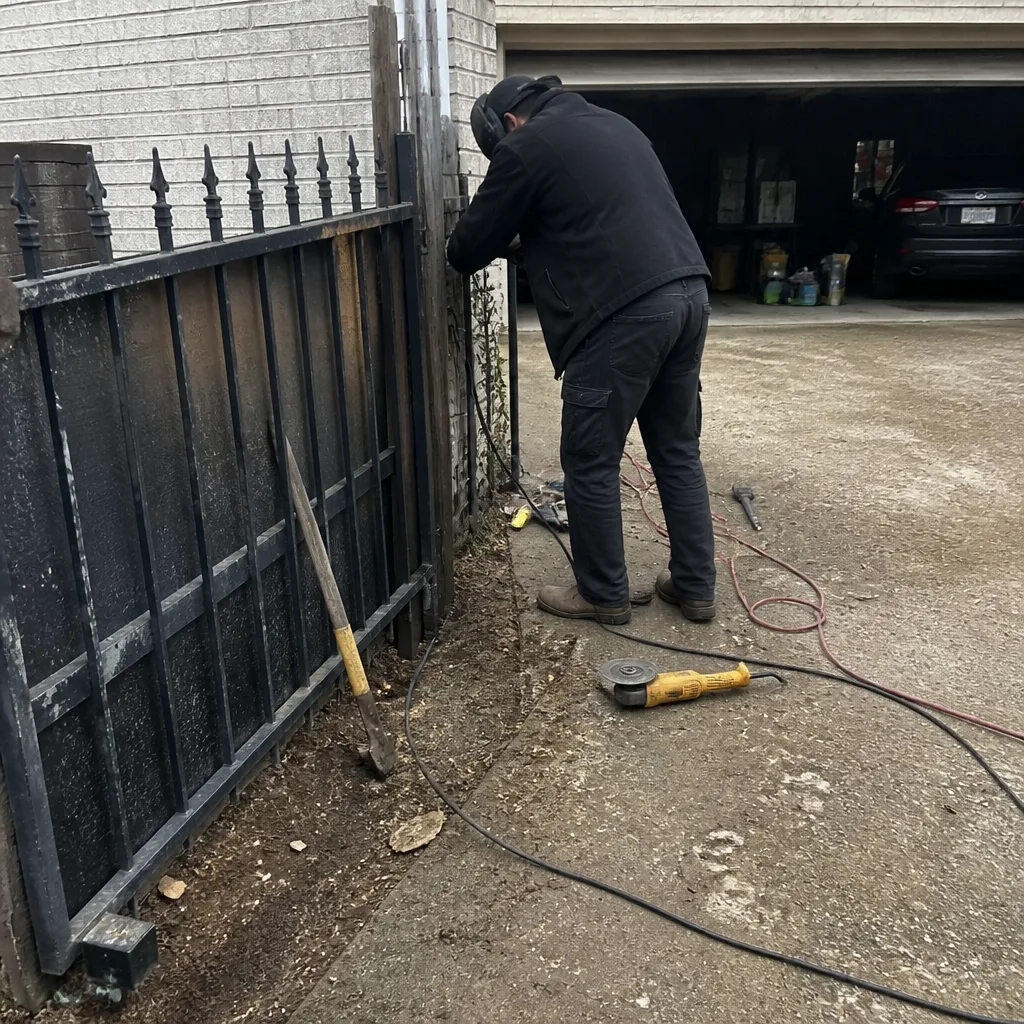 Before
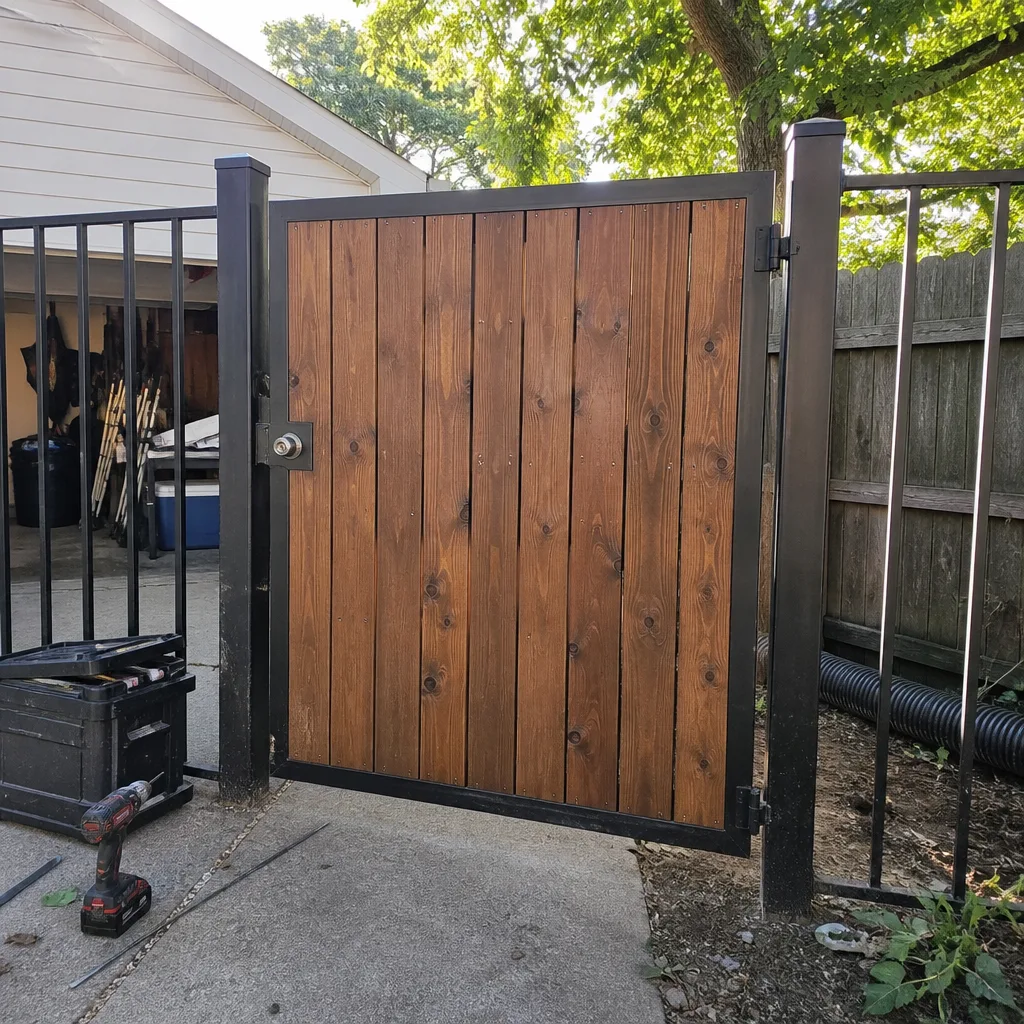 After
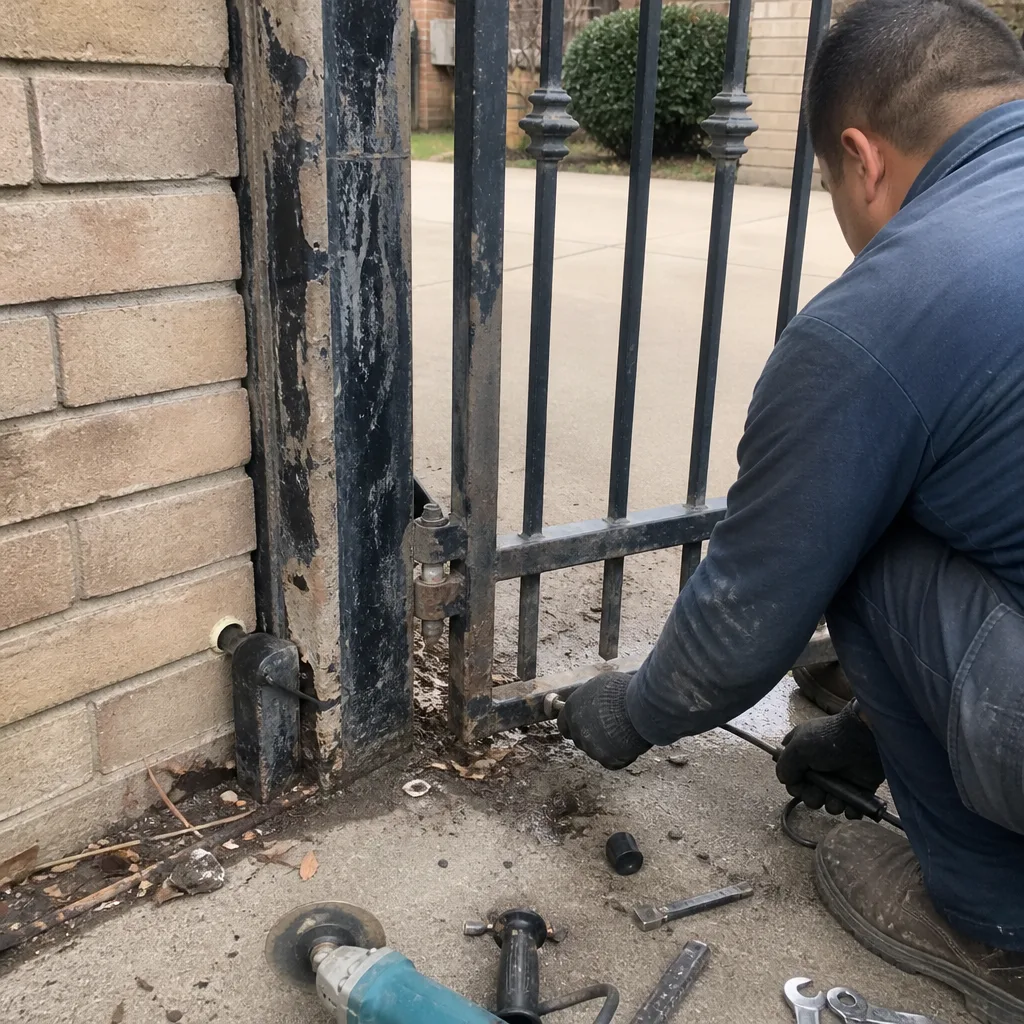 Before
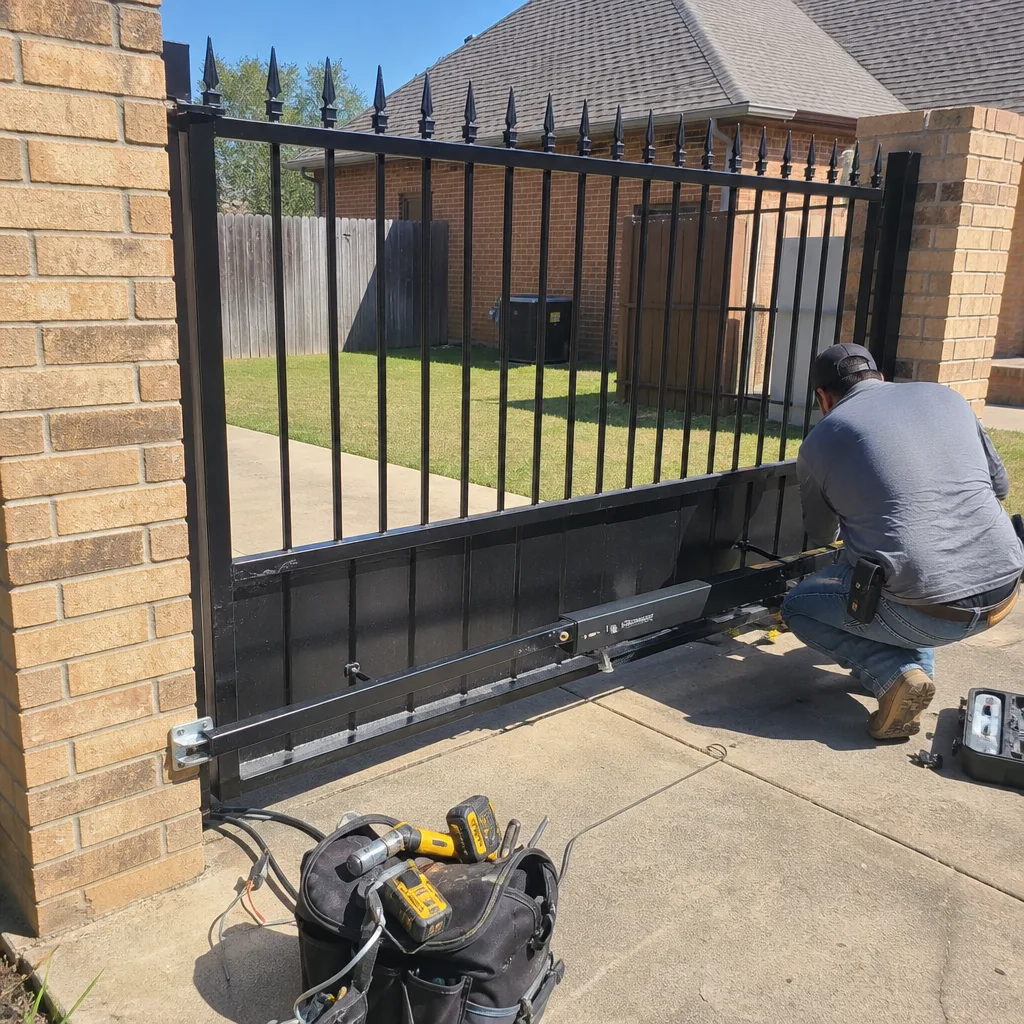 After
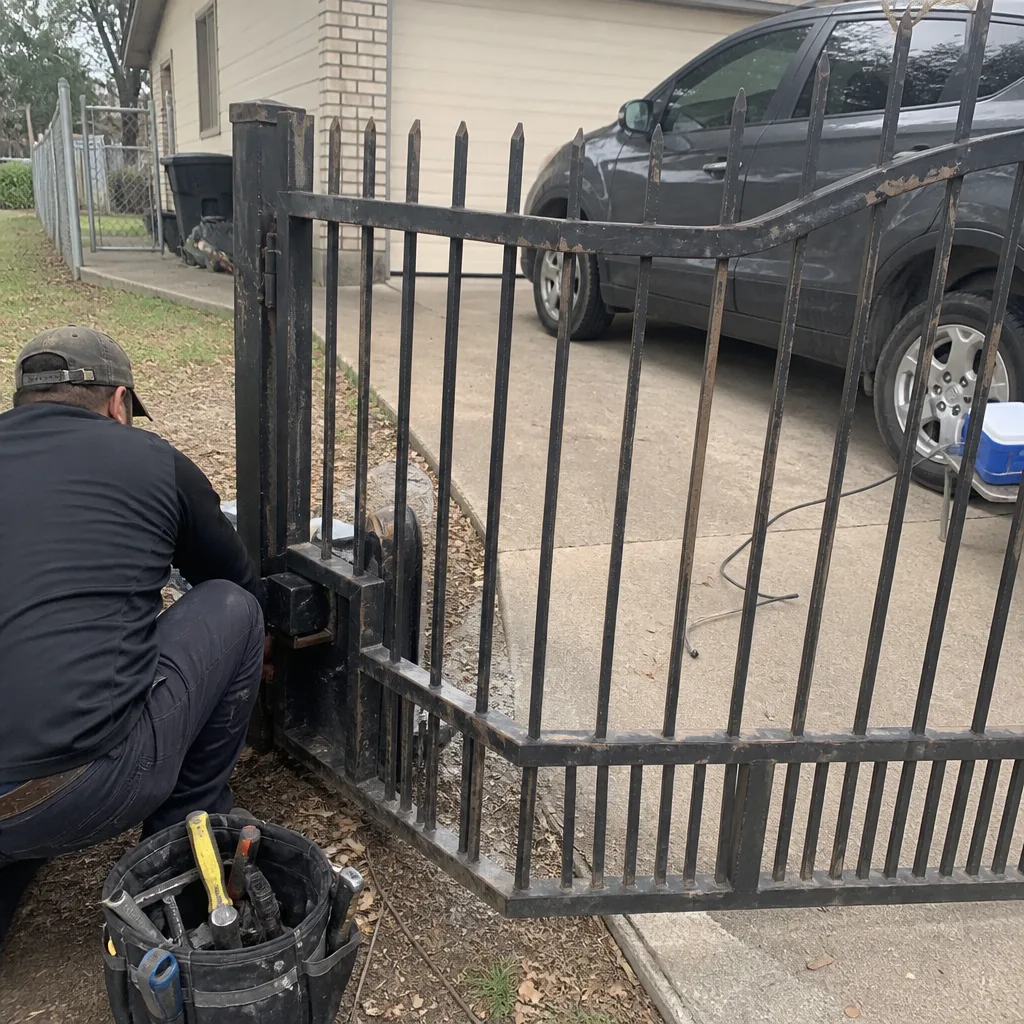 Before
 After
When to Call a Professional
Call a professional when the gate is physically heavy and off its track, when you hear grinding or popping under load, when the gate has been hit by a vehicle, when post anchors are visibly out of alignment, or when any electrical component shows scorch marks, burning smell, or repeated breaker trips. You should also call when the problem is intermittent and heat-related, because these failures point to electronic components that require proper diagnostic equipment and discharge procedures. If you are in DeSoto and unsure what you are dealing with, Bastion Gate Repair offers free estimates; call (866) 321-6117 and we will tell you honestly whether you have a simple fix or a project that needs professional attention.
Frequently Asked Questions
Gate repair in DeSoto typically costs between $180 and $800 depending on the component and gate type, with simple adjustments like limit switches starting around $100 and major repairs like post resets or circuit board replacements running higher. Call (866) 321-6117 for an exact quote; estimates are free.
The expansive black clay soil in DeSoto moves seasonally, shifting gate posts by several inches over time and pulling the gate out of alignment even when no component has failed. The permanent fix is a properly reset post with a new concrete footer dug below the active soil movement line.
You can safely replace batteries on solar or backup systems and make basic limit switch adjustments if you have the manual and you are comfortable with the process, but anything involving line voltage, tensioned springs, or circuit board diagnostics should be handled by a professional to avoid serious injury and warranty voids.
Heat-related failure usually traces to aging capacitors and degraded solder joints on the control board that only fail when the operator housing reaches high internal temperatures during DeSoto’s summer afternoons, a pattern that will get progressively worse until the component is replaced.
Place a level against the exposed face of the post; if the bubble is even slightly outside the center lines, or if the gate is dragging, binding, or showing uneven gaps at the latch, the post has moved and needs a proper reset rather than repeated hinge adjustments.
Compile a repair log with dated invoices, part numbers, and warranty documentation for all gate work, and verify that the current gate style and configuration complies with your HOA’s architectural guidelines before listing the property. Call (866) 321-6117 for a pre-listing gate inspection.
The Bottom Line
Gate failures in DeSoto are not random. They follow predictable patterns driven by expansive clay soil, extreme summer heat, and normal wear on components that many homeowners never see until something breaks. The most effective repair strategy is a diagnostic-first approach that identifies the actual root cause instead of patching symptoms. Whether it is a post that needs resetting, a heat-failed capacitor, or an access control system that has outlived its service life, the right repair starts with looking at what the soil, the sun, and the cycle count have actually done to your gate. That is what we do at Bastion Gate Repair, and it is the difference between a repair that lasts and a repair that repeats. Call (866) 321-6117 for a free estimate in DeSoto.
Written by the team at Bastion Gate Repair, serving DeSoto since 2012.