
Last updated October 30, 2026
 Wrought iron
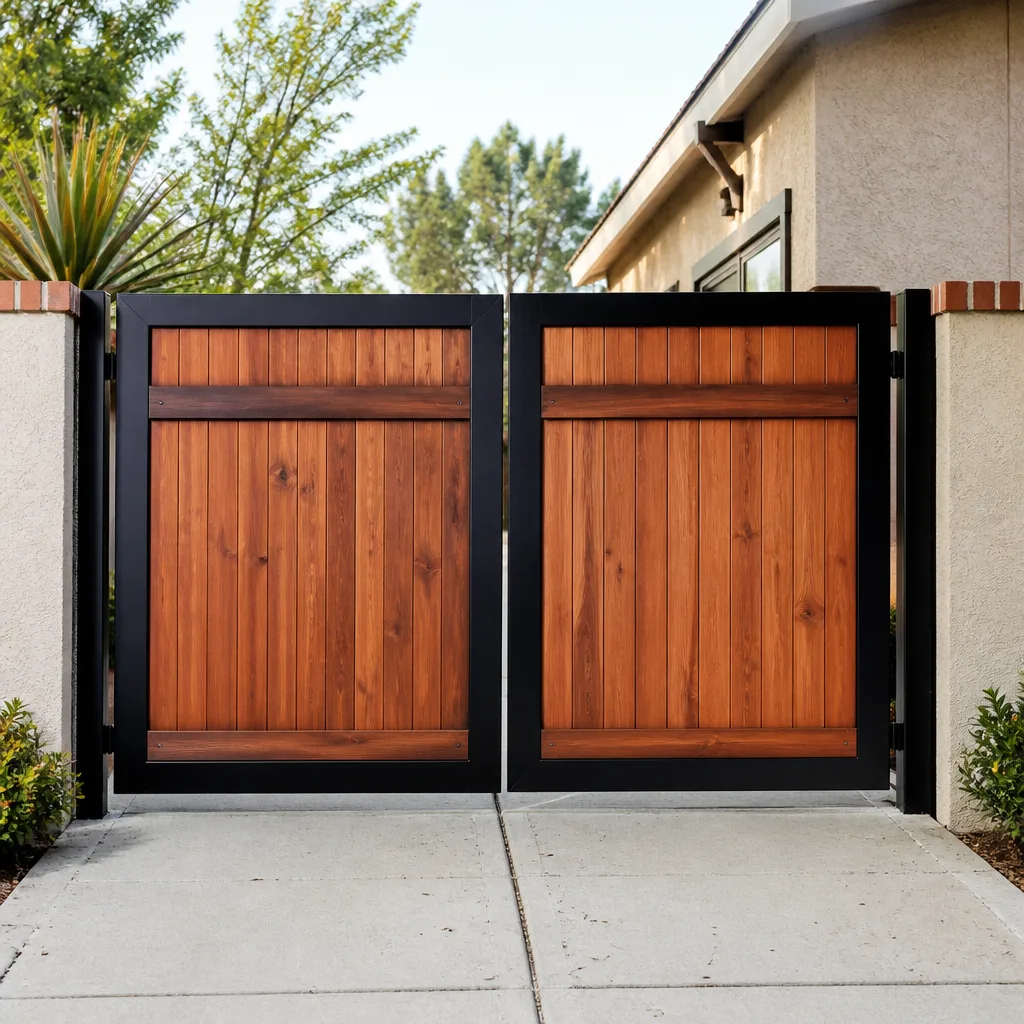 Wood & steel frame
 Farm & ranch
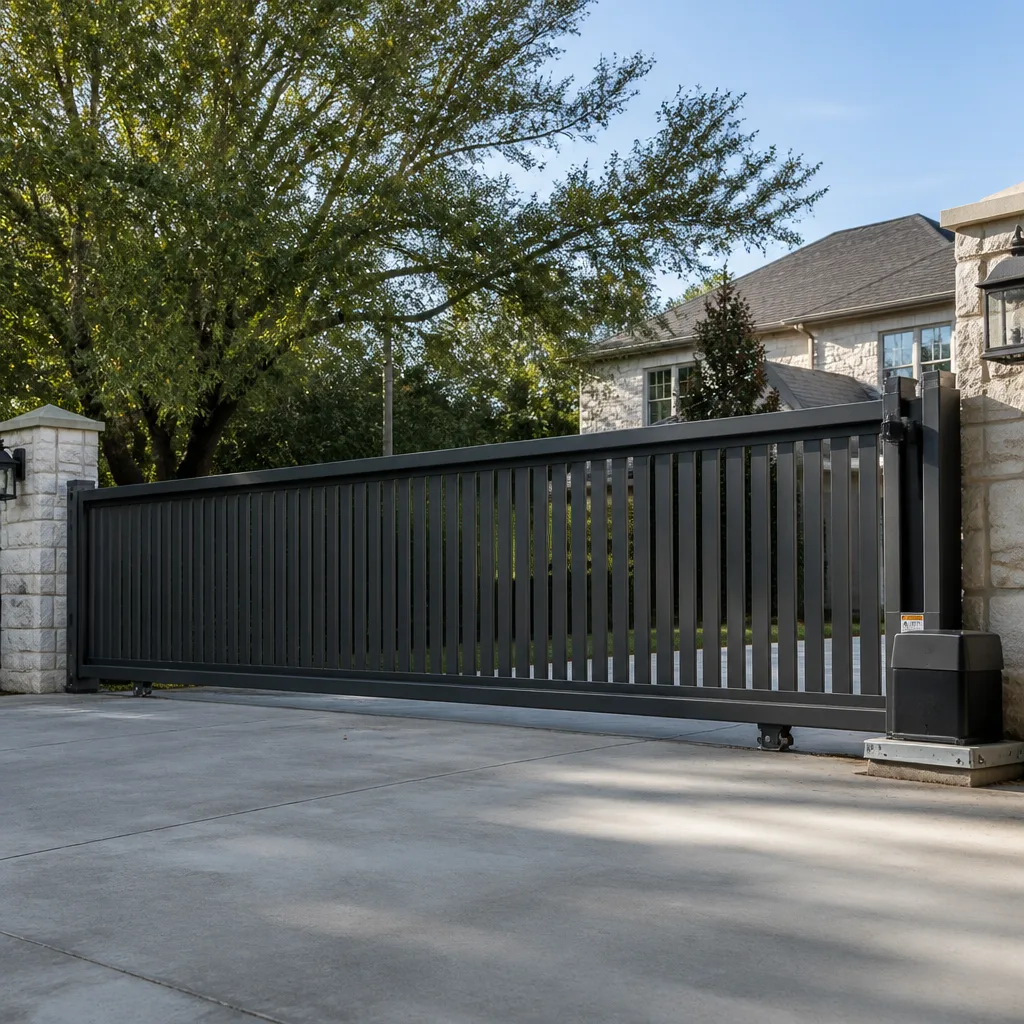 Sliding driveway gates
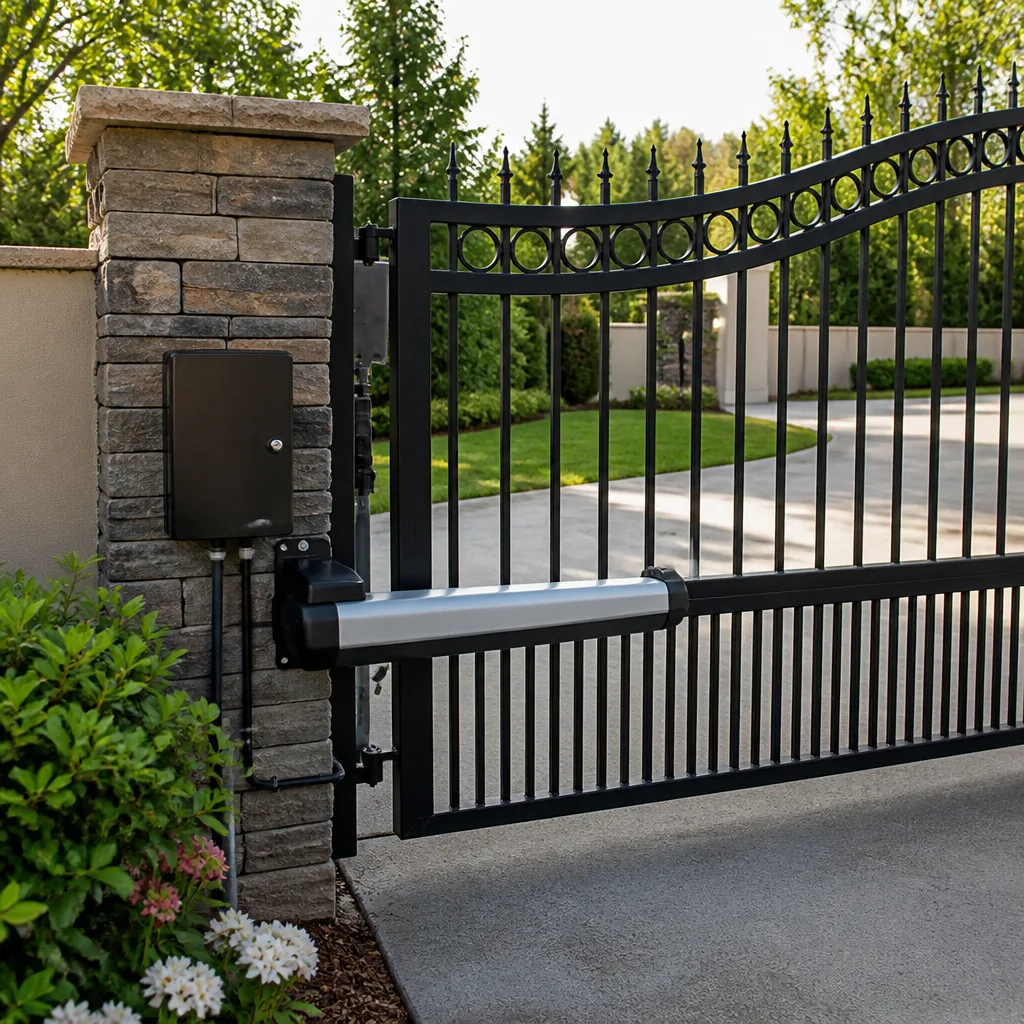 LiftMaster operators
Free on-site gate assessment - hinges, posts, and your LiftMaster or Nice gate operator checked before anything is quoted
The assessment is free and the quote is the invoice.
Get your free estimateGate Repair Permits, Codes & Inspections in TX: What You Need to Know
Most gate repair work in Texas doesn’t require a permit. The state leaves gate regulation largely to individual municipalities, and many smaller jobs sit outside any permitting trigger. But the specific jobs that do require permits are exactly the ones homeowners assume are routine. Replacing an operator on an existing concrete footer? In most Texas jurisdictions, no permit needed. But if that footer cracks and you repour it, you’ve just triggered a structural permit requirement that most contractors won’t mention. If you live in DeSoto or anywhere in Dallas County, this guide draws the line clearly so you know when the work is routine and when it crosses into regulated territory.
Quick Answer
Gate repair permits in Texas depend on the scope of work, not the word “repair.” Replacing a gate operator, fixing a hinge, or changing a circuit board typically requires no permit anywhere in the state. But structural changes such as repouring a concrete footer, moving gate posts, or altering the gate’s foundation almost always trigger a permit in DeSoto and most Dallas County municipalities. If you’re touching concrete, changing the footprint, or installing a new gate where none existed, check with your city before work starts, and see our Gate Repair Troubleshooting: Common Problems and How to Fix Them for related guidance.
Styles & brands we work with
Table of Contents
- When a Gate Repair Permit Is Needed in Texas
- What DeSoto and Dallas County Actually Require
- UL 325 Compliance: Why It Matters for Gate Operators
- HOA Gate Standards vs. Municipal Code in DeSoto
- Permits, Inspections, and Texas Home Sale Disclosure Law
- Who Pulls the Permit: You or the Contractor?
- Common Mistakes to Avoid
- When to Call a Professional
When a Gate Repair Permit Is Needed in Texas
Texas does not have a statewide gate permit requirement. Gate permitting is handled at the city level, and rules vary from one municipality to the next. What’s consistent across nearly every Texas jurisdiction is the distinction between mechanical work and structural work. Mechanical repairs, think operators, hinges, circuit boards, sensors, and access control components, sit outside the permit process. Structural changes, think footers, posts, columns, and foundations, almost always require a permit.
That line matters because a gate is both a mechanical device and a physical structure. When we service a LiftMaster or FAAC operator on an existing gate, that’s mechanical. No city in Texas is interested in that permit because nothing about the built environment is changing. But if the gate itself needs to be reset because a post shifted, and resetting the post means digging out the old concrete and pouring new, that’s structural work. The moment you touch the foundation, you’ve entered regulated territory.
Scope-of-Work Permit Triggers
Here’s what actually triggers a permit in most Texas municipalities, including DeSoto:
- New gate installation where no gate existed before. This changes the property’s footprint and usually requires a site plan review.
- Repouring a concrete footer or resetting gate posts. Even if the gate itself is identical, new concrete is new construction under most municipal codes.
- Moving an existing gate to a different location on the property. A gate relocated by ten feet is a new structure in the eyes of the building department.
- Adding a second gate or expanding the gate opening. Changing the width of the opening affects setback lines and easement requirements.
- Modifying a gate that sits on a shared property line or encroaches on an easement. Property line work triggers zoning review in nearly every Texas city.
What does not require a permit, in virtually every Texas jurisdiction:
- Replacing a gate operator, control board, or remote receiver
- Repairing or replacing hinges, rollers, or track hardware
- Fixing or replacing sensors, photo eyes, and loop detectors
- Repainting, staining, or refinishing the gate surface
- Replacing a damaged gate panel on an existing frame and footer
In our experience, roughly eighty percent of the gate repair calls we handle in DeSoto fall into the no-permit category; learn more in our Gate Repair Warning Signs: A DeSoto Homeowner’s Reference Guide. The other twenty percent, repours, relocations, new installations, are where we slow down and make sure the paperwork is right before concrete goes in the ground.
What DeSoto and Dallas County Actually Require
DeSoto operates its own building inspection department, separate from Dallas County. The city adopts the International Residential Code and International Building Code, which means gate-related structural work is treated like any other site structure. Before you dig, you need to know what department you’re dealing with and what they’ll ask for.
DeSoto-Specific Permit Requirements for Gate Work
- Identify the permit type. For most gate work involving a new footer or moved posts, DeSoto requires a simple building permit. If the gate includes electrical work, say you’re running power to a new gate location, you’ll also need an electrical permit.
- Prepare a site plan. DeSoto’s building department typically wants a scaled drawing showing property lines, the gate location, setback distances, and the location of any underground utilities. Setbacks in DeSoto residential zones generally require the gate to sit behind the front building line, but corner lots and golf course properties may have additional restrictions.
- Submit for review. Most residential gate permits in DeSoto are reviewed within five to ten business days. Commercial gate permits take longer, often two to four weeks, depending on zoning review.
- Schedule inspections. For structural gate work, DeSoto typically requires a footing inspection before concrete is poured and a final inspection after the gate is installed and operating. For electrically automated gates, they may also inspect the electrical rough-in before the operator is connected.
- Close out the permit. A permit isn’t complete until the final inspection passes and the permit is signed off. An open permit on a property is a red flag during a sale.
Dallas County itself is not the permitting authority for gate work in DeSoto. The county’s jurisdiction generally applies to unincorporated areas. If you live inside DeSoto city limits, which most incorporated DeSoto addresses are, the city permit process above is the one that applies.
What DeSoto Inspectors Actually Look For
When an inspector comes out for gate work in DeSoto, they’re checking specific things. The gate must meet setback requirements from the property line. The footing depth must be adequate for the gate’s weight and height, typically a minimum of 18 to 24 inches for a standard residential driveway gate in the North Texas clay soil, though your project’s engineered requirements may differ. And if the gate is automated, the inspector will look for compliance with UL 325 safety standards, which we cover in the next section. They’re not looking at the operator brand. They’re looking at whether the installation is safe and coded.
UL 325 Compliance: Why It Matters for Gate Operators
UL 325 is the safety standard that governs automatic gate operators in the United States. It’s not a Texas code, it’s a nationwide standard, and it matters because it’s what determines whether a gate operator installation is considered safe and compliant. If you have an automatic gate in DeSoto and the operator doesn’t meet UL 325 requirements, you’re carrying a liability that can surface in an insurance claim, a lawsuit, or a home sale.
The standard was developed after a series of entrapment deaths involving automatic gates. It sets requirements for the safety devices that must be present on any automated gate system: photo eyes, reverse sensors, audio alarms on certain gate types, and specific force settings that limit how much pressure the gate can apply before reversing. The key thing homeowners need to understand is that UL 325 compliance isn’t a feature. It’s the baseline.
What UL 325 Requires
- Entrapment protection devices. Every automated gate must have at least two independent entrapment protection mechanisms. This typically means photo eyes plus a reversing mechanism that responds to obstruction.
- Force settings within limits. The operator must be set so that the gate reverses when it encounters resistance, before that resistance reaches the UL 325 maximum force threshold.
- Warning signage. UL 325 requires specific warning placards on both sides of an automated gate. Missing signage is a compliance failure.
- Secondary entrapment protection for certain gate types. Gates with certain pinch points require additional devices, such as edge sensors or screen mesh to prevent finger entrapment.
Now, here’s the part most contractors won’t tell you. The UL 325 standard applies to the complete installation, not just the operator. If someone installs a brand-new UL 325 compliant operator on an old gate that lacks photo eyes or has unsafe pinch points, the installation is still not compliant. We see this regularly in older DeSoto neighborhoods where gates were installed in the 1990s or early 2000s, before automated gate safety was well understood. Those systems often have operators that were compliant at the time, but the gate hardware itself creates hazards that the original install never addressed.
Brand matters less than installation quality here. A properly installed Mighty Mule from the home center can be compliant, and a poorly installed Elite or FAAC commercial operator can be a liability. The compliance isn’t in the box, it’s in the setup, the sensor placement, the force settings, and the condition of the gate hardware.
HOA Gate Standards vs. Municipal Code in DeSoto
DeSoto has a significant number of HOA-governed communities, and when it comes to gates, the HOA often has more to say than the city. Municipal code is concerned with safety and structure. An HOA is concerned with appearance, uniformity, and property values. Those two sets of requirements don’t always align, and when they conflict, the stricter standard generally wins.
In DeSoto subdivisions with gated entries, the HOA typically owns and maintains the entrance gates. That’s community property, governed by the HOA’s architectural control committee and carried on the HOA’s books. But for an individual homeowner’s driveway gate, the situation is different. The homeowner owns the gate, but the HOA may still control what it looks like, how tall it can be, what material it can be made from, and even what type of operator is allowed.
Common HOA Gate Restrictions in DeSoto-Area Communities
- Material requirements. An HOA may require wrought iron or a specific metal finish, even though the city would allow wood or aluminum.
- Height limits. The city may allow a six-foot gate, but the HOA may cap driveway gates at four feet to preserve sightlines.
- Operator restrictions. Some HOAs prohibit certain operator types due to noise concerns, especially in communities where gates sit close to neighboring homes.
- Color and finish standards. An HOA may require a specific powder coat color that matches community fixtures. The city doesn’t care what color your gate is.
- Architectural review pre-approval. Many DeSoto HOAs require written approval before any new gate installation, and some also require approval for major repairs that change the gate’s appearance.
Here’s the practical takeaway. Before you start any gate project in an HOA community, check your CC&Rs and architectural guidelines. If you’re not sure, contact the HOA management company. Getting city permits and passing city inspections doesn’t excuse you from HOA compliance, and an HOA violation can be enforced regardless of whether the city approved the work. In our experience, the worst outcome is a homeowner who spends on a new gate, gets it installed, and then receives an HOA violation letter demanding changes. That’s a cost that no permit process would have caught.
Permits, Inspections, and Texas Home Sale Disclosure Law
Texas is a seller disclosure state. When you sell a home in DeSoto, you’re required to complete a Seller’s Disclosure Notice, a statutory form that asks specific questions about the property’s condition and any work that has been done. The form doesn’t specifically ask “did you pull a permit for your gate,” but it asks questions that unpermitted gate work can make very difficult to answer truthfully.
The disclosure form asks whether you’re aware of any condition that materially affects the value or health and safety of the property. An automated gate that lacks UL 325 compliant safety devices is a health and safety condition. The form also asks about any structural modifications. A new concrete footer for a gate is a structural modification. And when the line item doesn’t fit neatly into a box, the buyer’s inspector often finds the gap during the inspection period.
How Unpermitted Gate Work Surfaces During a Sale
- Buyer’s home inspection. A competent inspector will note a gate that appears newer than the surrounding property, especially if the operator has no visible permit documentation. They won’t verify permits, but they’ll flag the discrepancy.
- Appraisal review. If the gate was a significant investment, the appraiser may question whether the structure was permitted. An unpermitted structure can affect the appraisal valuation.
- Title company questions. Some title companies in Texas now run permit searches as part of the closing process. Open permits or work done without permits can delay closing.
- Lender requirements. FHA and VA loans have specific requirements around unpermitted structures. An unpermitted gate can be a loan condition.
Unpermitted gate work isn’t fatal in a Texas sale, but it creates a negotiating wedge. The buyer can demand a price reduction, request that the work be retroactively permitted, or ask for the gate to be removed. Retroactive permitting sounds simple but rarely is. The city can require you to expose the footing, verify its depth, and bring the installation into current compliance. That’s often more expensive than pulling the permit upfront would have been.
The cleanest approach is the one most homeowners prefer once they understand the stakes. If the work requires a permit, pull the permit. Keep the documentation. When you sell, you can hand over a clean permit history instead of answering questions you don’t want to answer.
Who Pulls the Permit: You or the Contractor?
In Texas, the property owner is ultimately responsible for ensuring that work on their property is permitted. That responsibility can’t be delegated away. But in practice, the contractor usually pulls the permit, and the way that arrangement is handled tells you a lot about who you’re working with.
For gate work in DeSoto, a licensed contractor can pull the permit in their name or in the property owner’s name. If the contractor pulls it in their name, they’re responsible for scheduling and passing inspections. If the permit is in the homeowner’s name, the homeowner carries that responsibility even if the contractor does the work. Most legitimate gate contractors will pull the permit in their name, because they know the inspection process will go smoother.
When to Ask Your Contractor to Pull the Permit
Ask the contractor to pull the permit in their name when:
- The work involves repouring a footer or resetting gate posts
- The work involves installing a new gate where none existed
- The work involves running new electrical service to a gate location
- The work is attached to a commercial property or a multi-family community
- The work will be substantial enough that a future buyer might ask questions
When a Permit Is Genuinely Unnecessary
Don’t ask for a permit when the work is purely mechanical. Replacing a circuit board on a LiftMaster operator, changing out a Mighty Mule arm on an existing installation, or repairing a hinge doesn’t rise to the level of regulated work in any Texas city we’re aware of. Asking for a permit in those situations just adds time and cost.
How to Get It In Writing
Here’s the step that protects you either way. When a contractor tells you a permit isn’t needed, ask them to put that in writing. A simple line in the contract or a separate note that says “no permit required for this scope of work per DeSoto building code” is enough. If the contractor won’t put it in writing, that’s a signal worth paying attention to. A contractor who knows the code will write it down. A contractor who’s guessing won’t.
We include a permit determination in every gate installation contract we write in DeSoto. If the job needs a permit, it’s in the contract. If it doesn’t, that’s in writing too. That’s how responsible contractors handle it.
Common Mistakes to Avoid
- Assuming all gate work is permit-free. Mechanical repairs are usually exempt, but the moment concrete enters the conversation, you’re in a different category. Check the scope before you check the box.
- Letting a contractor talk you out of a permit that’s clearly required. A contractor who says “we don’t need a permit for this footer” when the city code clearly requires one is not doing you a favor. They’re saving themselves a trip to city hall.
- Skipping UL 325 compliance on an operator replacement. A new operator on an old gate doesn’t automatically make the installation compliant. The complete system, gate included, needs to meet the standard.
- Ignoring HOA rules because the city approved the work. City approval and HOA approval are separate processes. Both matter in DeSoto, and an HOA violation can be enforced regardless of city permitting.
- Not keeping permit documentation after the work is done. The buyer’s inspector and the title company may want to see it. Keep the paperwork with the property records.
- Pulling a permit in your name when the contractor should be carrying it. When the contractor pulls the permit, they’re accountable for the inspections. When you pull it, you’re accountable. Keep the responsibility where it belongs.
- Repouring a footer without checking the setback line. Moving a gate post even a few inches can push the structure over the property line or into an easement. Survey stakes are cheaper than moving concrete.
When to Call a Professional
Gate work walks a strange line. Some jobs look simple and aren’t, some look complicated and are routine. The best reason to call a professional is when the work involves a structural component or a safety system, because that’s where the mistakes get expensive and the liability becomes real. If your gate is sagging because the post has shifted, that’s not a repair, that’s a structural issue that will require a permit and an inspection. If your operator isn’t reversing when it should, that’s a UL 325 compliance problem, not a convenience problem. We work on virtually every major gate brand, including LiftMaster, FAAC, Elite, and Mighty Mule, and we diagnose the system rather than defaulting to replacement. Bastion Gate Repair offers free estimates in DeSoto, call (866) 321-6117 and we’ll tell you what your system actually needs, or browse our more guides & resources.
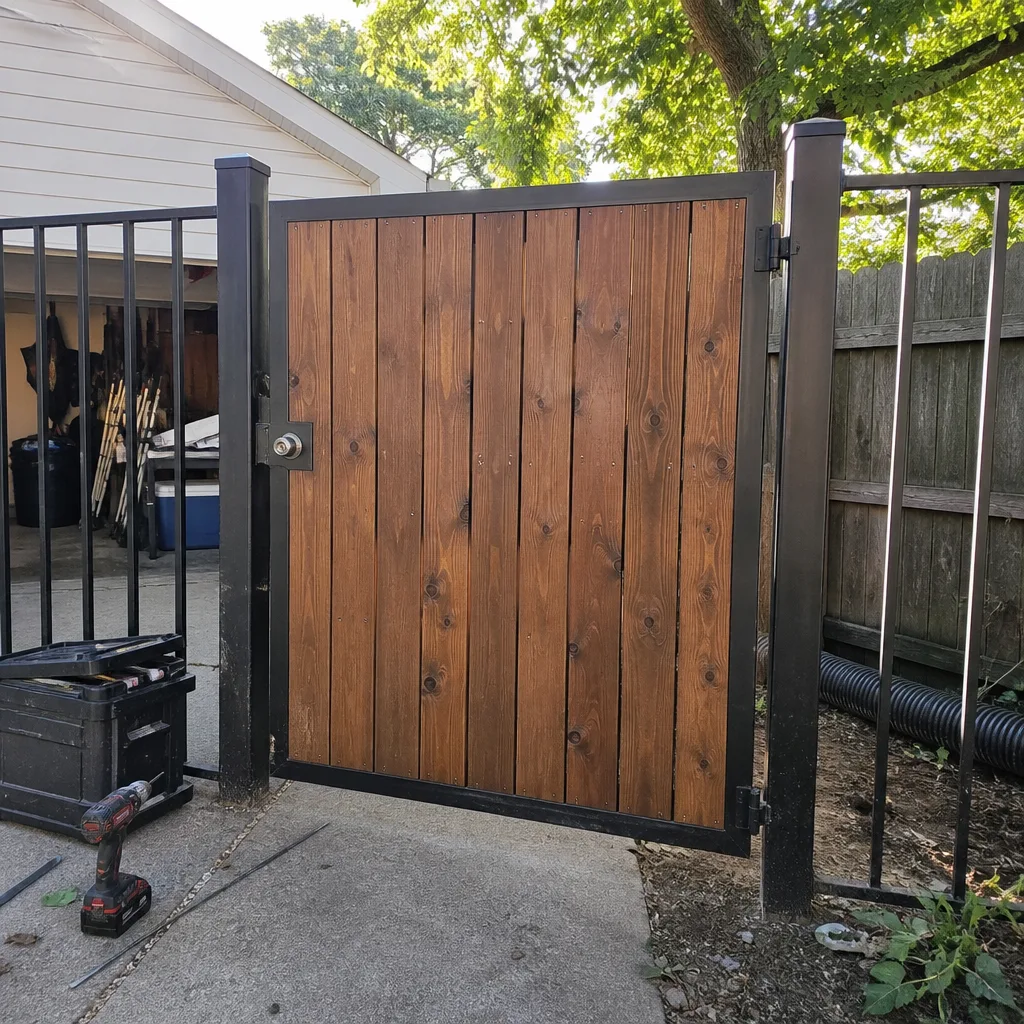
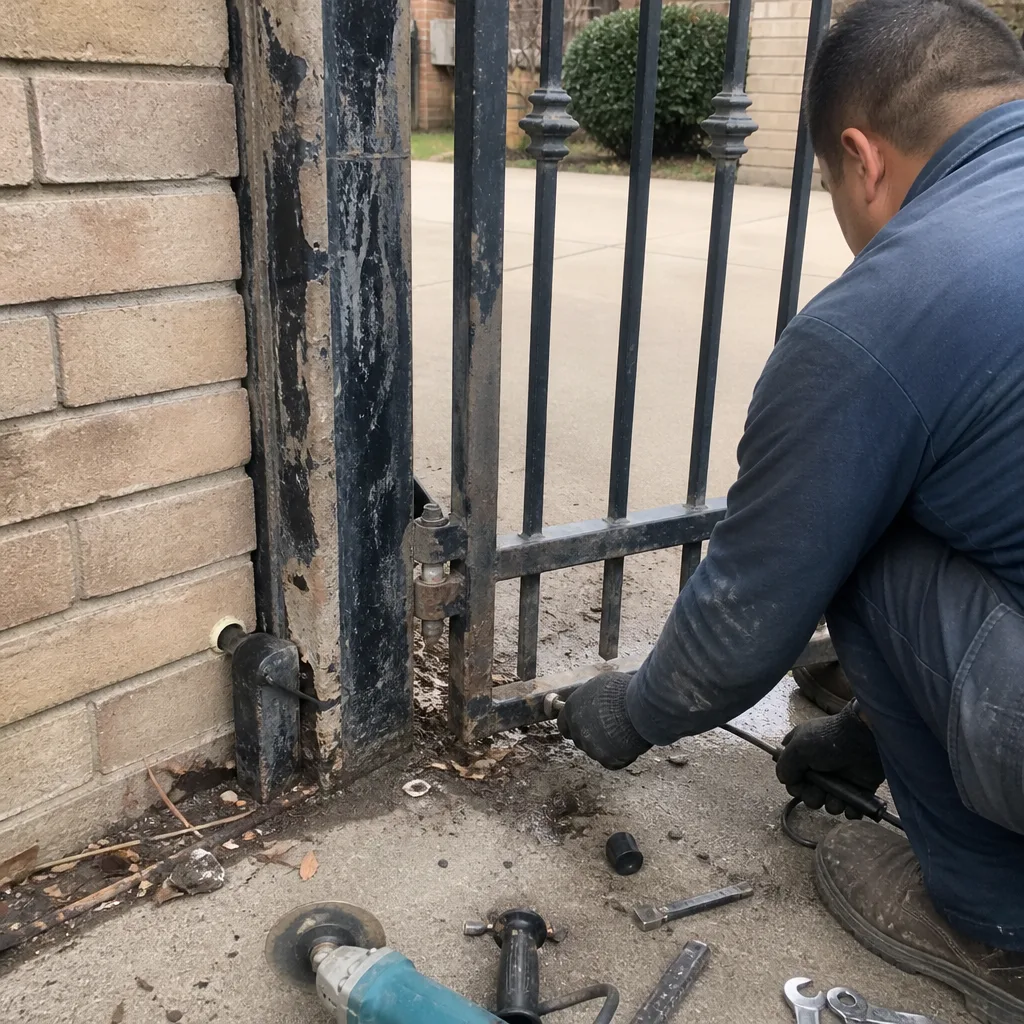
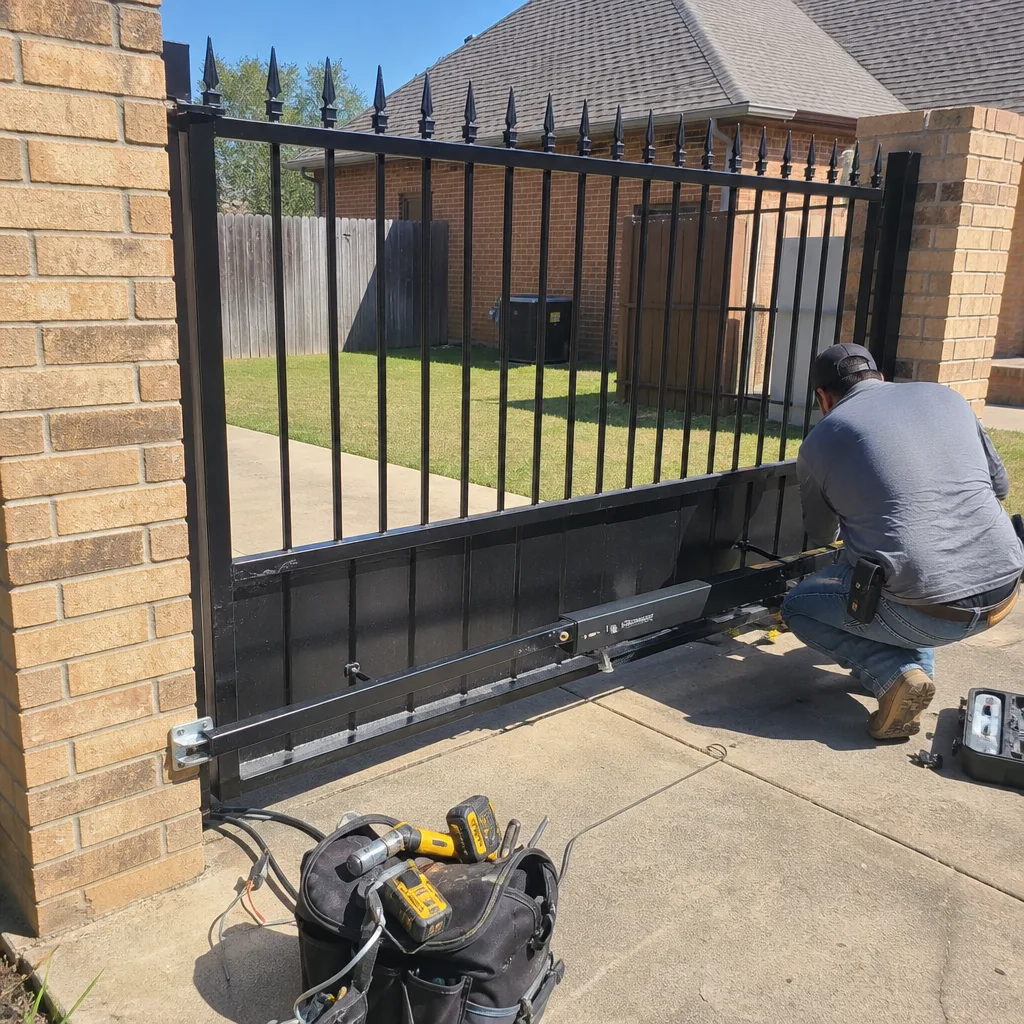
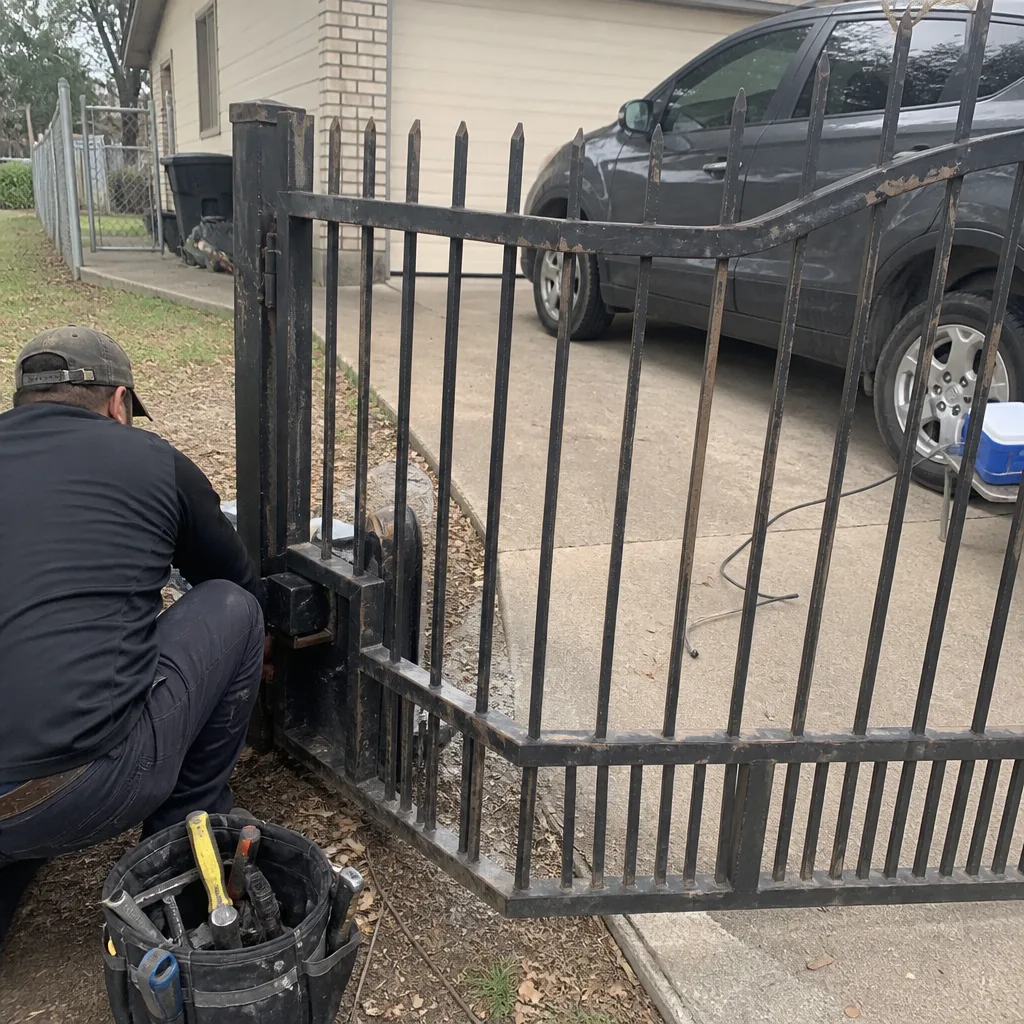
See the difference
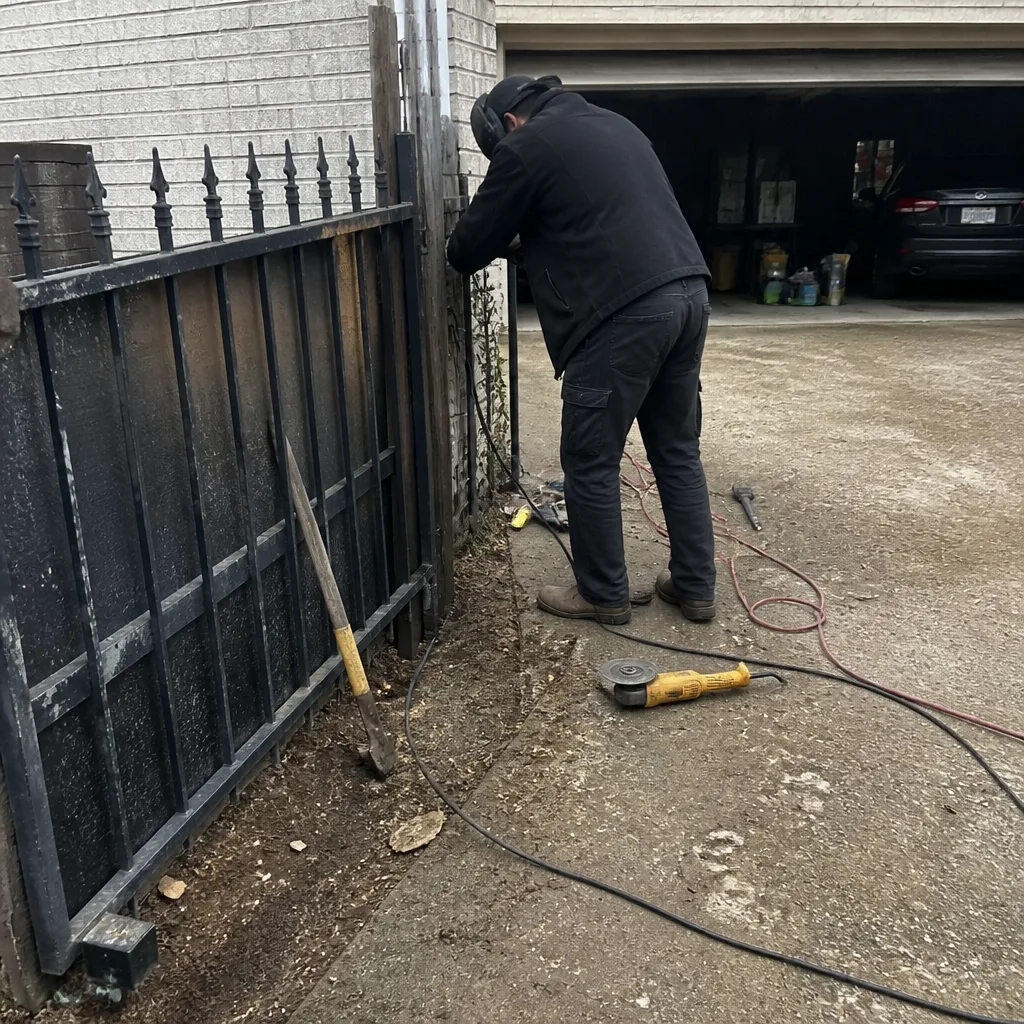 Before
 After
 Before
 After
 Before
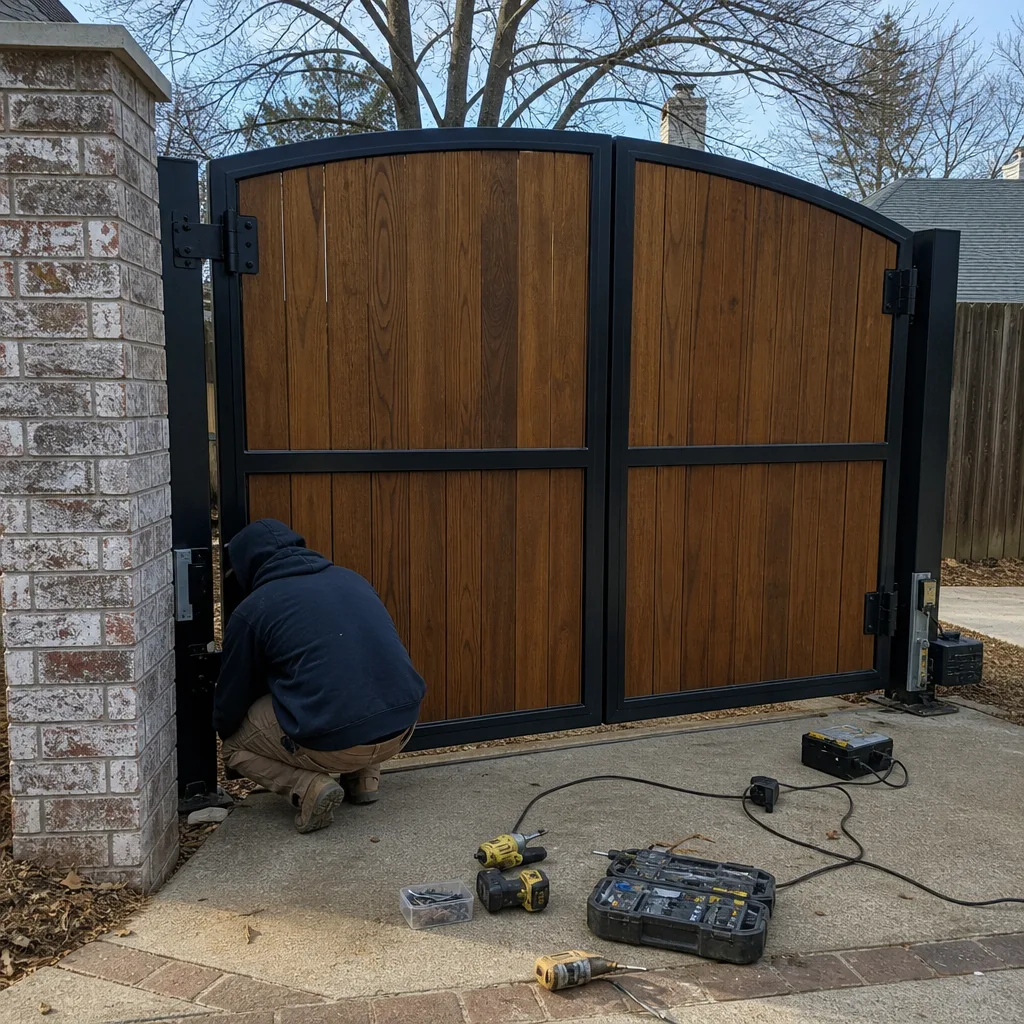 After
Frequently Asked Questions
No, replacing a gate operator on an existing gate and footer does not require a permit in DeSoto or most Texas municipalities. The work is considered mechanical, not structural. Call (866) 321-6117 for a free estimate on your operator replacement.
Yes, repouring or repairing a concrete gate footer requires a building permit in DeSoto. Concrete work is structural, and the city will want to inspect the footing before and after the pour. Most gate repair that touches concrete crosses into permit territory.
UL 325 is the national safety standard for automated gate operators, and it applies to every automated gate in Texas, residential and commercial. It requires entrapment protection devices, proper force settings, and specific warning signage. Non-compliant installations create liability and can surface during a home sale.
Yes, HOAs in DeSoto can and do impose standards that exceed municipal code. Material, height, color, and appearance restrictions are common even when the city has no position on those issues. Check your CC&Rs before starting any gate work in an HOA community.
In Texas, unpermitted gate work creates disclosure obligations that can complicate a sale. The buyer’s inspector, appraiser, or title company may flag the work, and the buyer can demand remediation or a price reduction. Permitted work with clean documentation avoids the issue entirely.
Yes, we pull permits in our name for gate work that requires them in DeSoto, and we document when a permit isn’t needed. Every installation contract includes a written permit determination. Call (866) 321-6117 for a free estimate.
The Bottom Line
Gate repair permits in Texas come down to one question: are you touching concrete or moving the gate’s footprint? If the answer is no, the work is almost certainly permit-free. If the answer is yes, you’re in regulated territory, and the permit is the cheapest part of the project. UL 325 compliance adds a second layer, separate from the permit process but equally important. In DeSoto, HOA rules add a third layer that city permits don’t address. The practical guidance for any homeowner or property manager is straightforward: know your scope, check your HOA rules if you have them, get the permit determination in writing, and keep the paperwork. If you’re ever unsure, call (866) 321-6117 and we’ll walk you through what your specific project requires before any work starts.
Related Services: Bastion Gate Repair home | Gate Repair in DeSoto | Electric Gate Repair in DeSoto | Gate Installation in DeSoto
Written by the team at Bastion Gate Repair, serving DeSoto since 2012.