
Last updated October 30, 2026
 Wrought iron
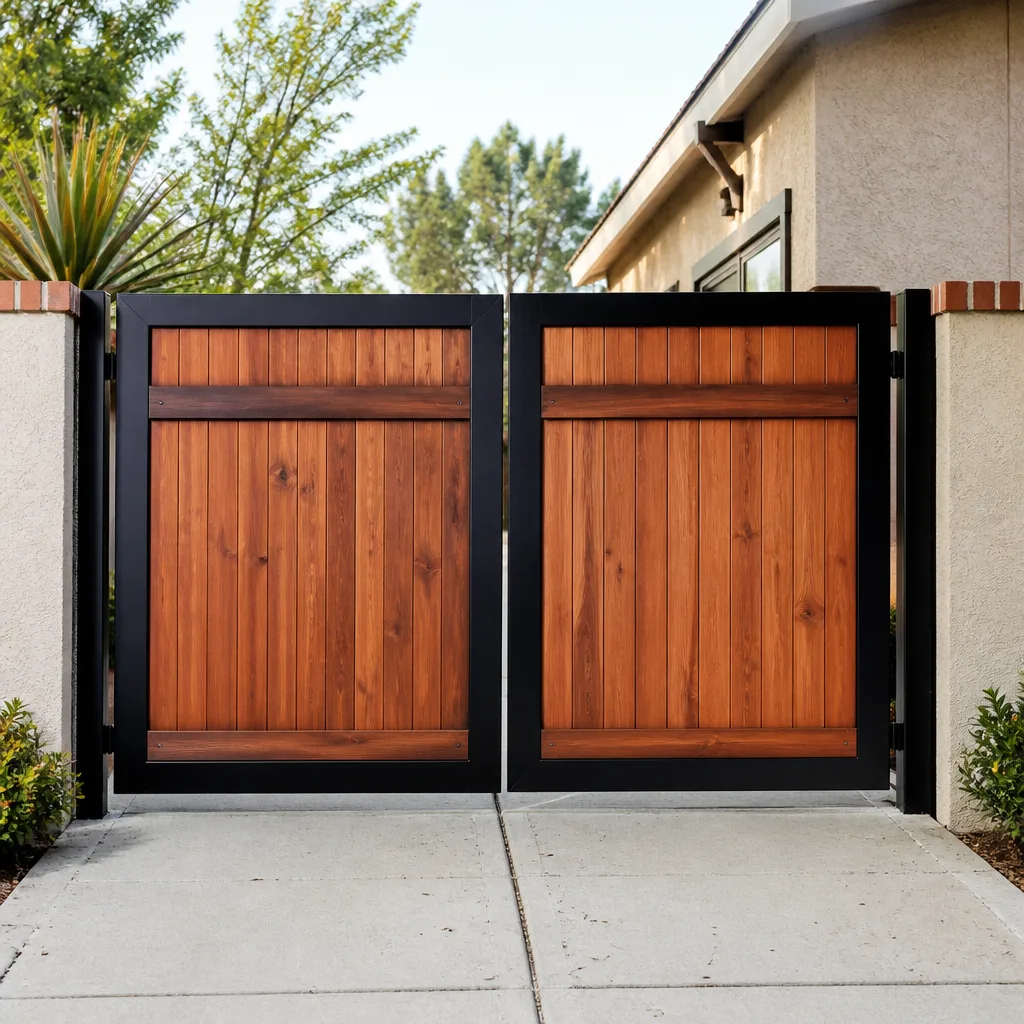 Wood & steel frame
 Farm & ranch
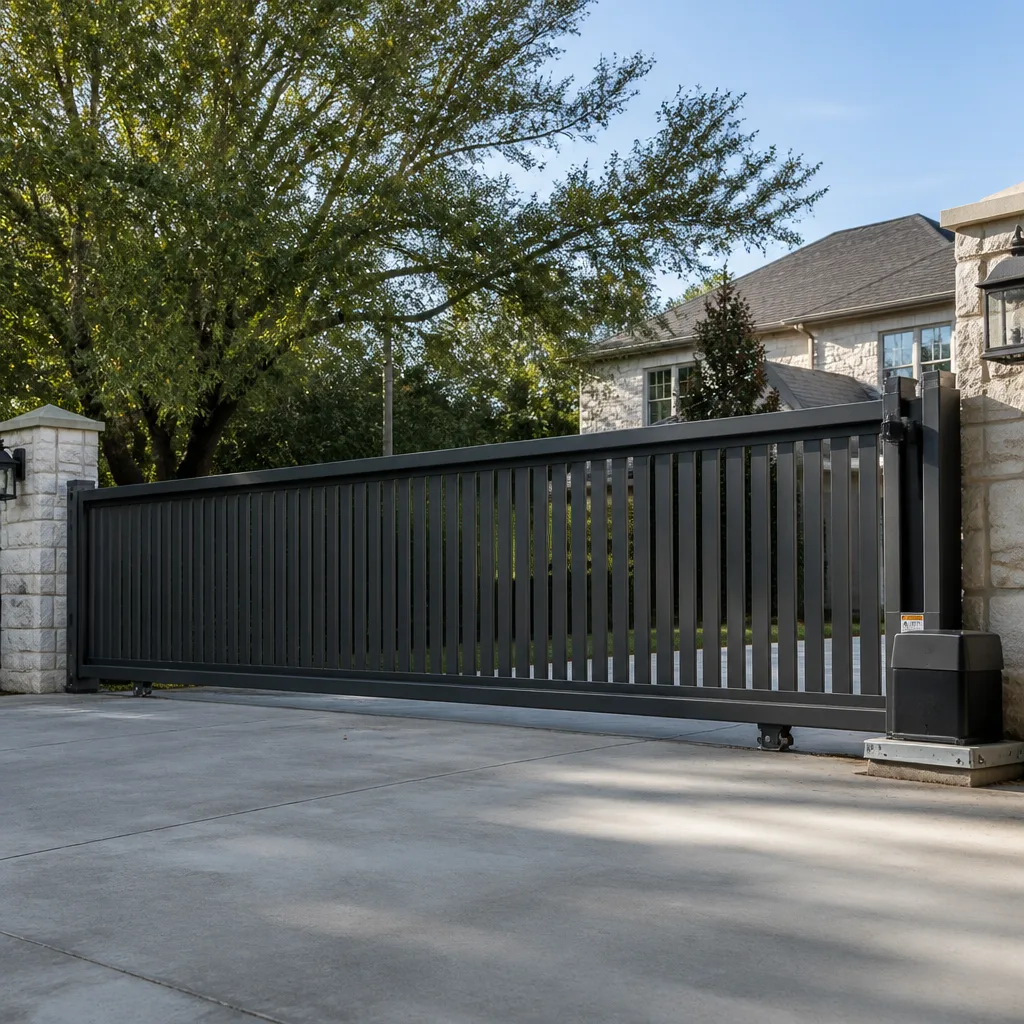 Sliding driveway gates
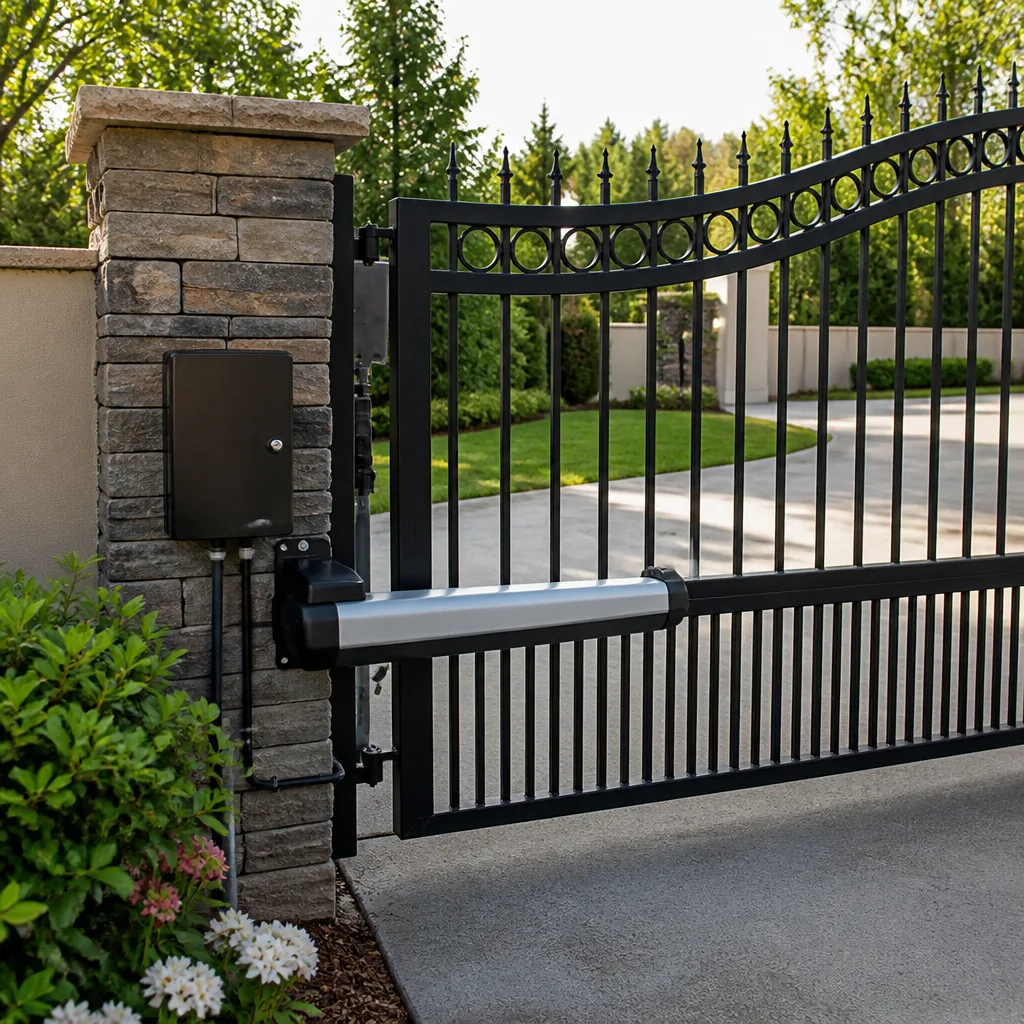 LiftMaster operators
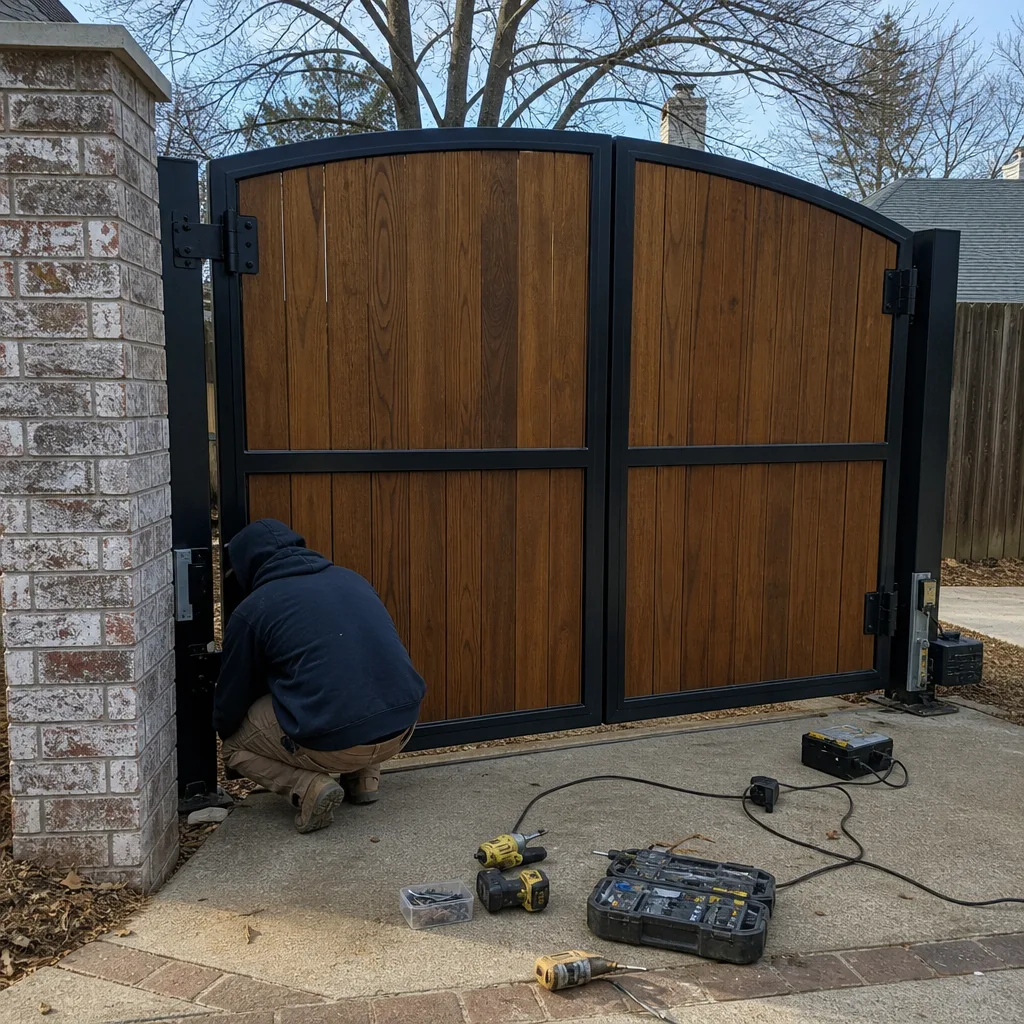
Free on-site gate assessment - hinges, posts, and your LiftMaster or Nice gate operator checked before anything is quoted
The assessment is free and the quote is the invoice.
Get your free estimateSeasonal Gate Repair Care for DeSoto: Year-Round Homeowner’s Guide
In DeSoto, the gate failures that happen in July were almost always set in motion in April. Heat stress, UV degradation, and thermal expansion don’t destroy a gate overnight – they compound damage that was structurally present months before the operator quit or the hinge sagged. Most homeowners call us when the gate stops moving. The smarter approach is understanding what DeSoto’s actual climate calendar does to gate hardware, and intercepting problems during the two mild windows when repair work is fast, affordable, and far less disruptive. This guide walks through the full year: what fails, when it fails, why it fails, and what you can do about it before the gate leaves your driveway half-open at 7 a.m. on a 100-degree Monday. For more detail, see The Complete Gate Repair Guide for DeSoto Homeowners.
Styles & brands we work with
Quick Answer
Seasonal gate maintenance in DeSoto TX means scheduling structural and electrical inspections during spring (March – April) and fall (October – November), before the summer heat stress period and storm vulnerability window arrive. Our Gate Repair services cover everything from inspections to full operator replacements. The most common failures we see – operator overheating, hinge sag from thermal expansion, sensor misalignment after wind events, and battery degradation – are all preventable with two focused maintenance passes per year and specific pre-storm checks on swing and slide gates.
Table of Contents
- The DeSoto Climate Calendar: What Actually Fails and When
- Spring Maintenance: The Critical April Window
- Summer Heat Stress: Operator Duty Cycles and Board Temperatures
- Storm Season Prep: Swing Gates vs. Slide Gates
- Fall Maintenance: The October Reset
- Winter Freeze Events: Short, Sharp, and Specific Damage
- The Post-Storm Inspection Protocol
- Common Mistakes to Avoid
The DeSoto Climate Calendar: What Actually Fails and When
DeSoto doesn’t have four equal seasons. We have a long, punishing summer that starts testing gate systems in late May, a storm window that runs from mid-March through June and again in October and November, and two narrow shoulder seasons – roughly six to eight weeks each in spring and fall – that are the only practical time for meaningful structural work. If you want to understand gate maintenance in this city, think in terms of stress periods and maintenance windows, not calendar quarters.
Here’s what we’ve observed across hundreds of residential and commercial gates in the DeSoto area over the years:
- March – April: Optimal maintenance window. Mild temperatures, dry ground, and enough time before summer heat to catch thermal expansion issues before they become failures. Post-winter inspection should happen now.
- May – September: Peak stress period. Consecutive days above 95°F push operator duty cycles beyond manufacturer ratings. Grease thins, boards overheat, plastic components become brittle, and batteries in backup systems degrade faster. Most emergency calls happen between June and August.
- October – November: Second maintenance window. The fall storm system brings wind gusts that misalign sensors and safety edges, plus the first rapid temperature swings. Ideal time for pre-winter lubrication and sensor calibration.
- December – February: Short freeze events. DeSoto rarely stays below freezing for a week, but even 48 hours of sub-freezing mornings changes grease viscosity and reveals weak batteries. Most freeze-related failures are pre-existing conditions that cold weather exposes.
The pattern is consistent: gates that get attention in April and October rarely fail catastrophically in July. Gates that get ignored until they stop moving do.
If you’re managing a gate in DeSoto and you only budget for one service call per year, make it April. We’ve written a broader overview of Gate Repair in DeSoto that covers the full spectrum of mechanical and structural failures, but this guide focuses on the seasonal rhythm specific to our climate.
Spring Maintenance: The Critical April Window
April in DeSoto is the single most important month on the gate maintenance calendar. The ground has settled from winter, temperatures are consistently in the 70s and low 80s, and you have roughly six weeks before the first sustained heat wave hits. Everything you do in April is insurance against the June through August stress period.
Here’s the step-by-step spring protocol we recommend for every automatic gate owner in DeSoto:
- Inspect hinge and roller hardware for thermal sag: Heat causes metal to expand. A hinge that’s already slightly loose in April will be visibly sagging by July, which changes the gate’s arc and puts extra load on the operator. Tighten, shim, or replace now.
- Clean and lubricate all pivot points: Use a lithium-based grease on hinge pins, wheel bearings, and slide gate rollers. Avoid WD-40 – it’s a cleaner, not a lubricant, and it strips the protective film that keeps moisture out during storm season.
- Check the operator’s duty cycle rating against your actual usage: This is the most overlooked check in residential gate maintenance. If your operator is rated for 10 cycles per hour and your family works different shifts with multiple vehicles, you’re exceeding the rating every single day. That’s not a gate problem – that’s a specification problem, and it’s fixable with the right operator.
- Test the manual release mechanism: Every automatic gate has a way to disengage the operator and move the gate by hand. Most homeowners in DeSoto have never touched this mechanism. If it’s stuck or corroded in April, you won’t be able to use it when the storm kills power in May.
- Inspect safety sensors and photo eyes: Spring pollen and dust in DeSoto coat sensor lenses quickly. A sensor that’s 50% obstructed in April is 90% obstructed by June. Clean lenses with a dry microfiber cloth – not glass cleaner, which leaves residue.
- Check battery backup health: If your gate has a battery backup, test it now. The battery should hold the gate through at least 5 – 10 full open-close cycles on its own. If it doesn’t, replace it before storm season, not after the power goes out.
We’ve seen the difference between gates that get this spring pass and gates that don’t. The ones that skip April are working against physics by August. The ones that get the full inspection sail through summer.
Summer Heat Stress: Operator Duty Cycles and Board Temperatures
North Texas heat above 95°F does three specific things to automatic gate systems, and none of them are reversible once the damage is done. Understanding what’s happening inside your operator box during a DeSoto summer is the difference between a 10-minute service call and a full operator replacement.
First: duty cycle degradation. Every operator has a manufacturer-specified duty cycle – the percentage of time the motor can run before it needs to cool down. That rating is calculated at room temperature. At 100°F ambient temperature, the effective duty cycle drops significantly because the motor can’t shed heat fast enough. A residential operator rated for 10 cycles per hour at 75°F may only safely handle 6 cycles per hour at 100°F. Exceed that consistently, and the thermal overload protection trips – or worse, it doesn’t, and the motor windings degrade.
Second: control board heat soak. The circuit boards inside your operator enclosure are rated for a maximum operating temperature, typically 140°F to 185°F depending on the brand. Inside a metal enclosure mounted on a west-facing brick wall in DeSoto in July, the internal temperature can exceed that rating before the board even powers up. Heat-soaked boards don’t fail immediately – they develop intermittent faults: the gate opens but doesn’t close, the remote works sometimes, the LED display flickers. These are warning signs of thermal damage that’s already occurring.
Third: battery chemistry acceleration. Heat accelerates chemical reactions – that’s true for batteries as much as anything. A lead-acid or lithium backup battery that would last 3 – 4 years at room temperature may only last 18 – 24 months in a DeSoto summer. If your gate’s battery backup is more than two years old and you’re heading into June, test it now.
What can you do before summer hits? Here’s the list that matters:
- Ensure the operator enclosure has adequate ventilation – shade the box if it’s in direct afternoon sun, but never seal it against rain in a way that traps heat.
- Add heat-shielding to the enclosure if it faces west or south. Even a simple reflective panel mounted an inch off the box surface can drop internal temperatures by 15 – 20°F.
- Reduce unnecessary cycles during peak heat hours. If the gate opens for the mail carrier at 2 p.m. every day, consider a pedestrian gate or a delivery passcode system that doesn’t require full gate cycling.
- If your operator is older, consider an upgrade before summer – not after a failure. Newer models from LiftMaster and DoorKing have better thermal management than 10-year-old units, and the upgrade cost is often less than two emergency summer callouts.
We diagnose Electric Gate Repair in DeSoto calls all summer where the root cause is thermal stress on the board or motor. If your gate starts behaving erratically only on hot afternoons, that’s the signature of a heat-related issue – and it won’t fix itself.
Storm Season Prep: Swing Gates vs. Slide Gates
DeSoto’s storm vulnerability window isn’t a single week – it runs from mid-March through early June, with a secondary burst in the fall. The wind and rain we get from North Texas storm systems affect swing gates and slide gates differently, and the prep work needs to match the gate type.
Swing gates catch wind like a sail. A properly installed swing gate should withstand 50 – 60 mph gusts, but only if the hinges, post anchors, and operator attachment points are in good condition. Before storm season:
- Tighten all hinge bolts and check for play. A swing gate with 1/4″ of hinge play becomes a 500-pound lever in high wind, and the forces multiply.
- Inspect the operator arm connection. The clevis pin and retaining clip should be snug, not worn. Replace any component with visible wear.
- Set the closing speed to a moderate pace. Slow gates are quieter, but too-slow gates leave the opening exposed longer during wind events. There’s a middle ground, and a proper calibration finds it.
- Know your manual release. In a power outage, you need to be able to disengage the operator and secure the gate open or closed – not flapping in the wind. The release is usually a keyed cylinder on a padlock-style box or a pull chain inside the gate frame.
Slide gates sit closer to the ground and move along a track. Their storm vulnerabilities are different:
- Clear debris from the track. In high wind, leaves, gravel, and mud get blown into the v-track or the track channel. A slide gate that hits debris mid-cycle will stall and may throw the chain or belt off the idler pulley.
- Check the guide rollers. These keep the gate tracking straight in wind. Worn rollers allow the gate to twist, which can derail it entirely during a strong gust.
- Inspect the chain or belt tension. Under-tensioned chains jump teeth. Over-tensioned chains wear bearings faster. Storm season exposes both.
- Verify the limits are set correctly. If the gate over-travels even 1/2 inch, the wind load on the end of the gate multiplies. Correct limit settings reduce that load dramatically.
One note that applies to both gate types: if you have a battery backup, test it before the storm forecast appears. When the power goes out during a DeSoto storm, the gate needs to complete one full open-close cycle to let emergency vehicles through. A dead backup battery means you’re using the manual release – which you’ve already tested, because you read the spring maintenance section above.
For more detail on automation and operator components, our Gate Installation in DeSoto page covers how new systems are specced and installed to handle North Texas wind loads from day one.
Fall Maintenance: The October Reset
By October, DeSoto gates have survived five months of heat, a spring storm season, and at least a few wind events that pushed sensors and safety edges out of alignment. October is the reset window – the second of the two annual maintenance passes, and the one that prepares the gate for winter’s short freeze cycles and the fall storm track.
The fall protocol is shorter than spring, but it’s not optional:
- Re-calibrate safety sensors and photo eyes. Wind, heat expansion, and vehicle traffic all knock sensors slightly out of alignment over the summer. A sensor that’s 1 degree off in August is 3 degrees off by October. Re-align and re-test the safety reversal feature.
- Switch to a cold-weather grease. Standard lithium grease thickens at 40°F and becomes a real problem during a DeSoto freeze event. Switch to a low-temperature synthetic grease at the pivot points – it maintains viscosity down to -20°F and back up to 300°F, so it’s a true year-round solution.
- Inspect rubber seals and weatherstripping. Summer UV breaks down rubber components. By fall, the seals around the operator enclosure and any rubber stops or bumpers are cracked or hardening. Replace them before winter moisture gets inside.
- Check the concrete pad and post anchors. North Texas soil expands and contracts with moisture. By fall, the soil around the gate post has likely shifted slightly. Check for hairline cracks in the concrete base and any movement in the post anchor bolts.
- Test the full cycle under load. Run the gate through 10 consecutive open-close cycles and listen. Changes in sound – new grinding, clicking, or hesitation – are early signals of wear that will become failures when the temperature drops.
- Grease viscosity changes. Standard grease thickens at low temperatures, which means the gate’s pivot points resist movement more than they should. The operator compensates by pulling more current, which stresses the motor and control board. If the gate sits idle during the freeze, the thickened grease doesn’t cause a problem – but the first operation after a freeze puts maximum load on a cold system.
- Battery output drops. Cold temperatures reduce battery capacity. A backup battery that tests fine at 75°F may only deliver 60% of its capacity at 30°F. If the gate loses power during a freeze and the battery is marginal, the gate won’t complete its emergency cycle.
- Sensor misalignment compounds. Cold causes metal to contract, not expand. That contraction shifts optical sensor alignment in the opposite direction from the summer heat shift. A sensor that was re-aligned in October may be slightly off after the first freeze – usually not enough to fail, but enough to change the sensitivity threshold.
- Safety edge hardening. Rubber safety edges stiffen in cold. They still function, but their responsiveness changes. A safety edge that reverses the gate at 3 pounds of pressure at 70°F may require 8 pounds at 30°F – which means the gate closes harder than it should before the edge triggers.
- Measure the gate’s travel time. Time the gate from fully closed to fully open. Compare it against the original specification. A gate that’s 10 – 15% slower after a storm has likely sustained hinge or roller damage that’s changing the friction load.
- Check the safety reversal force. The manufacturer specifies a maximum closing force before the gate reverses. If the gate requires more force to close after a storm, the cause is usually debris in the track or bent hardware – not a broken operator. Catch it now, before the operator burns out trying to push through the increased load.
- Inspect the top rail and horizontal members for bowing. High wind loads can bow a gate frame without leaving visible damage on the surface. Run a straightedge – or a taut string – along the top of the gate. Any bow over 1/2 inch is structural damage that will worsen over time.
- Test the sensor beam alignment with a simple obstruction test. Block the beam with a piece of cardboard. The gate should reverse immediately. If it doesn’t, or if the reversal point has changed, the beam is misaligned or the sensor housing is loose.
- Check for water intrusion in the operator enclosure. Storm rain driven horizontally can force water past seals that were already degraded by summer UV. Open the enclosure and look for moisture, corrosion, or mineral deposits on the board and terminals.
- Re-tension the chain or belt if you have a slide gate. Wind stress can stretch chains and belts. A chain that slackens by even 1/4 inch changes the load characteristics on the drive sprocket.
- Lubricating with the wrong product. WD-40 is a water displacer, not a gate lubricant. It strips existing grease and leaves metal surfaces vulnerable to moisture. Use a lithium-based grease for summer and a synthetic low-temperature grease for winter.
- Ignoring slow operation as a non-issue. A gate that’s gotten slower over several months is telling you something specific: friction is increasing, and the operator is working harder to compensate. The operator will eventually fail – it’s just a question of when. Slower gate movement is a diagnostic signal, not an aesthetic preference.
- Skipping the manual release test. When the power goes out during a storm and the battery backup is dead, the manual release is your only way to move the gate. If you’ve never tested it, you won’t know whether it works until you need it. And in DeSoto, that need arrives without warning.
- Setting the closing speed too slow for the location. On gated communities and commercial entrances, a too-slow gate leaves the perimeter exposed longer after each vehicle. That’s a security tradeoff, not just a convenience issue. A gate that doesn’t close promptly is a security gap.
- Replacing the operator when the problem is structural. If the hinge is sagging, the post is leaning, or the track is bent, a new operator won’t fix the problem – it’ll just burn out faster. Always diagnose the mechanical condition before replacing electrical components. We’ve seen too many DeSoto homeowners spend $1,500 on a new operator when the real issue was a $400 hinge repair.
- Waiting for the gate to fail completely before calling anyone. This is the single most expensive mistake we see. A gate that gets ignored for three years and then fails in July is a much bigger repair than a gate that gets caught at the first sign of trouble. The April and October maintenance windows exist for a reason.
- Choosing the wrong operator for the duty cycle. Not all operators are built for the same usage level. A residential operator on a commercial entrance, or a low-duty operator on a high-traffic driveway gate, will fail repeatedly regardless of maintenance. Match the operator to the usage, not just the gate size.
October is also the right time to tackle any upgrade or replacement work you’ve been considering. The weather is cooperative, parts lead times are shorter, and the gate isn’t working against you the way it is in July. If you’re thinking about a new operator, a Bastion Gate Repair home consultation can evaluate what you have and what makes sense – whether it’s a repair, a component upgrade, or a full replacement.
Winter Freeze Events: Short, Sharp, and Specific Damage
DeSoto doesn’t get Minnesota winters. We get 48-to-72-hour freeze events, usually in January or February, where temperatures dip below 28°F overnight and stay there for a couple of days. Those short freezes are enough to damage specific components – and the damage often doesn’t show up until weeks later, when temperatures warm back up and the gate starts acting strangely.
Here’s what happens during a DeSoto freeze event:
What should you do after a freeze? Not much, immediately. The real risk period is the first operation after a thaw. Listen for strained motor sounds, watch for jerky movement, and test the safety reversal feature manually. If anything feels off, don’t wait – a cold-stressed component that gets ignored becomes a summer failure.
The good news is that DeSoto’s freeze events are short enough that the damage is usually mechanical wear, not catastrophic failure. The bad news is that the damage accumulates: each freeze cycle adds stress to components that are already dealing with summer heat degradation. Over three or four years, that accumulation shows up as a gate that simply won’t stay healthy.
The Post-Storm Inspection Protocol
After a significant storm passes through DeSoto – especially spring supercells with wind gusts over 40 mph – there’s a set of checks that catch damage while it’s still invisible to the eye. Most homeowners look at their gate, see that it opens and closes, and assume everything’s fine. The problems we find in post-storm inspections are almost always things that were measurable but not yet visible.
Here’s the post-storm inspection protocol we recommend after any significant wind or hail event:
None of these checks take more than 15 minutes, and all of them together cost nothing but time. They catch the damage that’s invisible to the eye but measurable in the gate’s behavior. At Bastion Gate Repair, we perform this exact protocol on gates across DeSoto after every major weather event – and the data we collect from one storm tells us what to expect from the next one. Check our blog for more guides & resources on gate care.
Common Mistakes to Avoid
When to Call a Professional
Some gate issues are safe and sensible to address yourself: cleaning sensors, clearing track debris, testing the manual release, and visual inspections. Others require a professional – and knowing the difference matters. Call a specialist when the gate makes grinding or popping noises that suggest bearing or gear wear, when the operator trips its thermal protection repeatedly on hot days, when the gate reverses unexpectedly or fails to stop at the correct limits, or when you see visible sagging in the gate frame or hinge hardware. Electrical issues – intermittent operation, flickering control boards, remote interference, or anything involving the line wiring – are never DIY territory. A gate is a heavy moving object, and the electrical system that controls it carries enough voltage to hurt someone. If you’re in DeSoto and something feels wrong with your gate, Bastion Gate Repair offers free estimates – call (866) 321-6117 and we’ll diagnose it properly.
Frequently Asked Questions
Seasonal gate maintenance in DeSoto typically costs between $125 and $300 per service visit, depending on the gate type, operator complexity, and what the inspection finds. Basic spring and fall maintenance passes are less than emergency repairs almost every time. Call (866) 321-6117 for an exact quote on your specific gate setup.
The best times to maintain an automatic gate in DeSoto TX are April and October – the two mild shoulder seasons between summer heat stress and winter freeze events. April catches heat-related issues before the June through August stress period, and October resets sensors, grease, and seals before winter and fall storm season.
Texas heat reduces operator duty cycles, overheats control boards, and accelerates battery degradation in every gate system we service. The motor can’t shed heat as effectively in 100°F ambient temperatures, which means it needs fewer cycles per hour to avoid thermal overload. A properly ventilated operator enclosure and a duty-cycle-appropriate operator are the two biggest heat-defenses.
Before a severe storm in DeSoto, test the manual release, tighten all hinge and anchor bolts, clear debris from slide gate tracks, verify sensor alignment, and confirm the battery backup can complete at least one full open-close cycle. If you can’t confirm any of those, the gate is not storm-ready – call (866) 321-6117 and we’ll get it ready.
No. After a DeSoto freeze event, a gate that won’t open is usually dealing with thickened grease, a weakened battery, or a cold-stressed motor – all of which need diagnosis with the proper tools. Attempting to force the gate open by hand can strip gears or damage the operator. Call a professional instead.
Automatic gates in North Texas should be serviced twice per year – once in the spring and once in the fall – regardless of whether anything appears wrong. The heat stress, storm events, and freeze cycles that characterize DeSoto’s climate make annual service insufficient for reliable gate operation.
The Bottom Line
DeSoto’s climate punishes automatic gates in specific, predictable ways: summer heat stress that exceeds operator ratings, spring and fall storm winds that misalign sensors and stress structural components, and short but sharp freeze events that degrade grease, batteries, and safety systems. The gates that survive these cycles reliably are the ones that get attention in April and October – the two mild windows when maintenance is affordable and prevent the catastrophic failures that dominate our summer emergency call list. A well-maintained gate is a security asset, not a stressor. The opposite is true as well. Schedule your spring pass now, before the heat arrives, and your gate will work when you need it most. For homeowners and property managers in DeSoto, Bastion Gate Repair handles the full gate lifecycle – from repair to electric diagnosis to new installation. Call (866) 321-6117 for a free estimate and we’ll evaluate your gate against our seasonal checklist, spot the problems before they become emergencies, and keep your perimeter working year-round.
Written by the team at Bastion Gate Repair, serving DeSoto since 2012.
See the difference
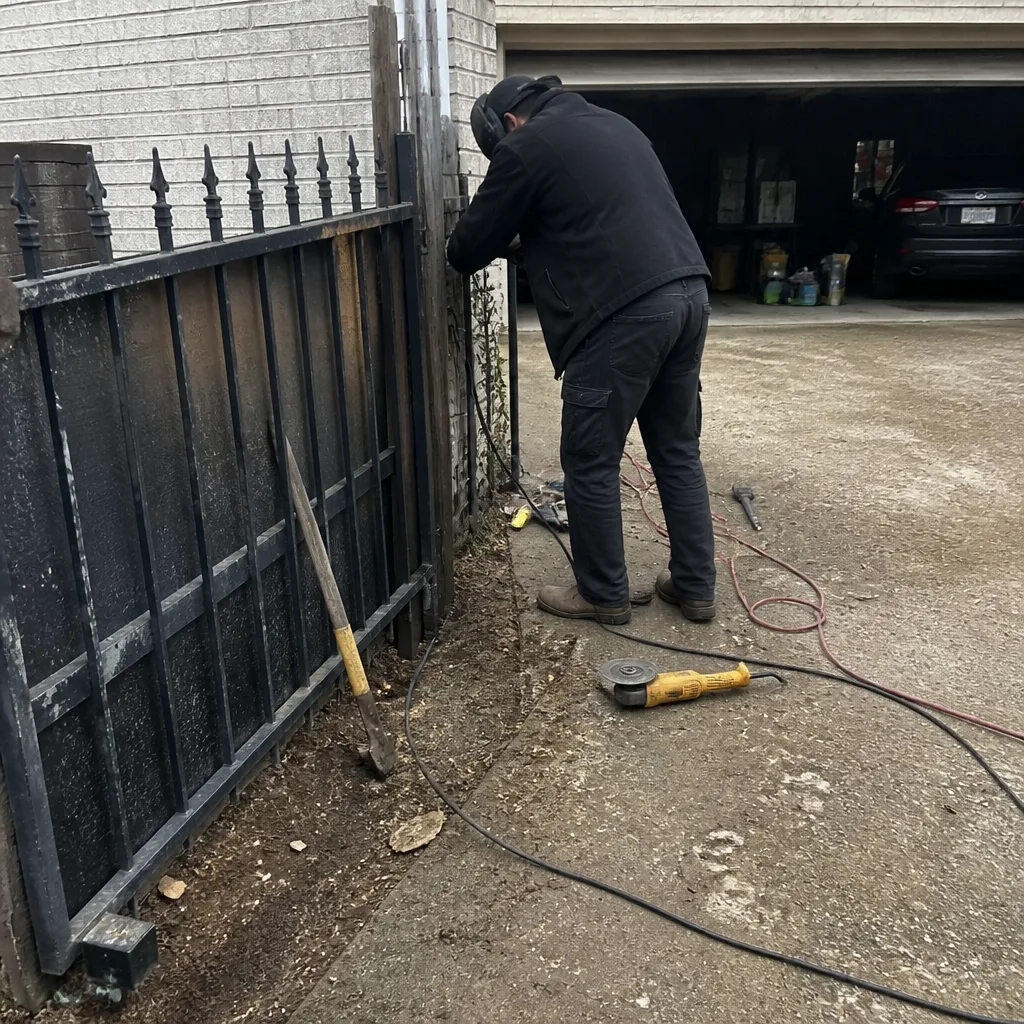 Before
 After
 Before
 After
 Before
 After